Sausage and Vegetables: 5 Easy Tips for a Sheet Pan Dinner
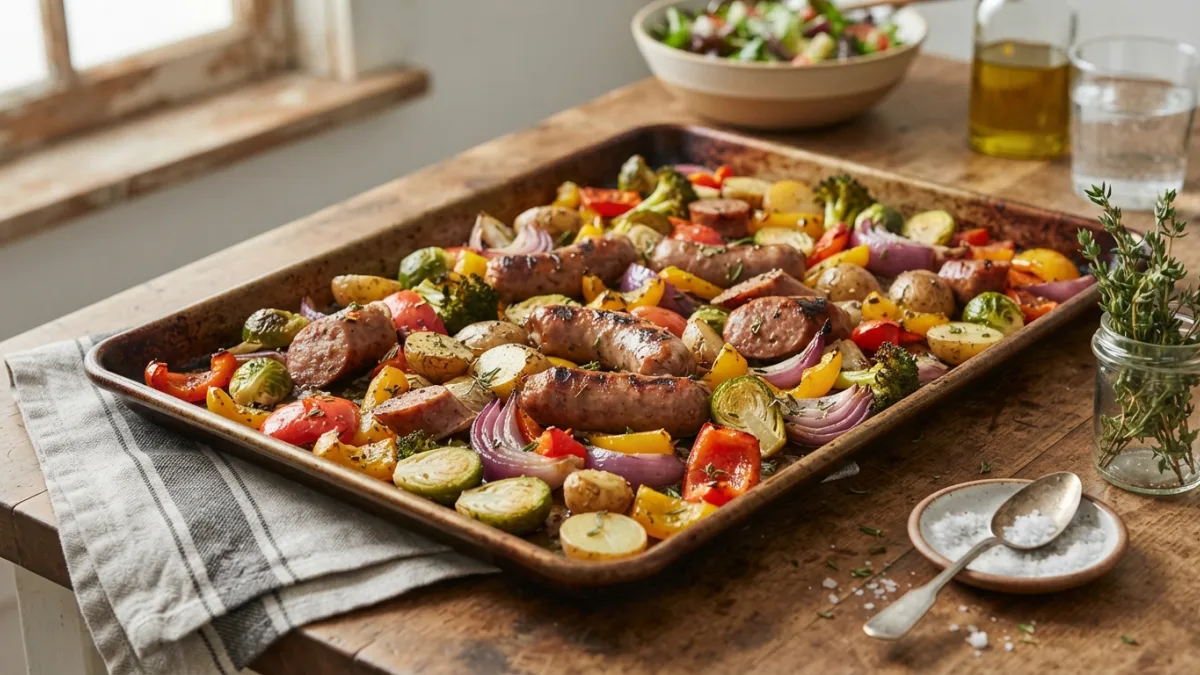
Sausage and vegetables on one pan might be the easiest dinner you cook all week. You chop, season, slide the tray into a hot oven, and let the heat do the rest. In about 40 minutes, the sausage browns, its juices coat the vegetables, and your kitchen smells like a much fancier restaurant. Best of all, you wash only one pan. This guide shares five simple tips that make the dish work every time, whether you cook for yourself, a busy family, or a full week of lunches. You don’t need special skills or gadgets. A sheet pan, an oven, and a little patience will get you there.
Why Sausage and Vegetables Belong in Your Weeknight Rotation
If you collect easy weeknight dinner ideas, put this one near the top of your list. It needs few ingredients, and you can change it with the seasons. Swap summer zucchini for winter squash, or trade chicken sausage for spicy pork. The pan handles protein, vegetables, and a bit of starch all at once, so you don’t need three pots on the stove. It also forgives small mistakes. If you cut a carrot a little too thick or forget to flip the tray, dinner is still tasty. Kids often eat it without complaint, too, because the roasted edges taste sweet and a little smoky. That mix of low effort and high reward is why this meal keeps showing up in home kitchens. If you want to dig deeper, our guide on Sheet-Pan Salmon and Vegetables in 25 Minutes covers this in more detail.
5 Easy Tips for Better Sausage and Vegetables on a Sheet Pan
Tip 1: Start With the Best Sausage for Roasting
The best sausage for roasting holds its shape, has enough fat to stay juicy, and brings its own flavor to the pan. Fresh Italian sausage, bratwurst, and chicken-apple links all work well. Pre-cooked smoked sausages, such as kielbasa, also do the job. They only need to heat through and pick up color. Sausage comes in many styles around the world, and you can read a short overview on Wikipedia’s sausage page. Whatever you choose, check that it is fully cooked. The U.S. government lists safe minimum cooking temperatures, including 160°F (71°C) for ground pork and 165°F (74°C) for poultry. A quick-read thermometer takes the guesswork out of it.
Tip 2: Choose the Best Vegetables to Roast
The best vegetables to roast are the ones that brown well and don’t turn to mush in a hot oven. Potatoes, carrots, red onions, bell peppers, broccoli, cauliflower, and Brussels sprouts all earn their place on the pan. Softer vegetables like zucchini and cherry tomatoes cook faster, so add them later. The key is size. Cut dense vegetables, like potatoes and carrots, into small pieces, about the size of a large grape or a little bigger. Cut quick-cooking ones into larger chunks. This way, everything finishes at the same time. If you want to make your sausage and vegetables feel complete, add a handful of chickpeas or a few apple wedges for a sweet, tangy twist.
Tip 3: Nail the Roasting Temperature and Time
Roasting temperature and time decide whether dinner comes out golden or soggy. For most trays, set the oven to 425°F (220°C) and plan for 25 to 35 minutes. That heat is strong enough to brown the sausage and caramelize the vegetables without drying everything out. Preheat the oven fully before the pan goes in. Halfway through, flip the sausages and stir the vegetables so each side gets color. Thick links may need a few extra minutes, while thin ones can finish sooner. Don’t trust the clock alone. Check the sausage with a thermometer, and pierce the biggest potato piece with a fork. When both are ready, rest the tray for two minutes before serving. This connects closely with another common issue — see 10 Sheet-Pan Dinners for Busy Weeknights for more on that.
Tip 4: Go for Crispy Roasted Vegetables
Crispy roasted vegetables come down to three things: dry surfaces, enough oil, and plenty of space. Pat washed vegetables dry before you season them, because water creates steam, and steam makes soft, pale pieces. Toss them with a thin, even coat of oil. Then spread everything out in one layer with small gaps between pieces. If the pan looks crowded, use two trays. Crowding is the most common reason roasted food turns limp. For extra browning, put the empty sheet pan in the oven while it preheats, then add the vegetables to the hot metal. You’ll hear a sizzle right away, and that sound means crisp edges are on the way.
Tip 5: Try New Sausage Seasoning Ideas
Sausage seasoning ideas can keep this meal from getting boring. Most sausage already has salt and spices in it, so go lighter than you normally would, and taste before you add more. Smoked paprika, garlic powder, and dried oregano suit Italian-style links. Mustard and maple syrup, brushed on during the last ten minutes, give a sweet and sharp glaze. Chili flakes and a little honey add heat. Fresh rosemary or thyme works well with potatoes. Finish the tray with a squeeze of lemon, a spoonful of pesto, or a drizzle of yogurt sauce. A small change at the end can make the same sausage and vegetables taste like a brand-new dinner.
A Simple Sausage and Vegetables Recipe to Try Tonight
Here is a basic formula you can follow without measuring much. It serves about four people and works with almost any combination from the tips above. Use it as a starting point, then adjust to your taste and what is in your fridge. You might also find our article on One Pot Chicken Orzo: 5 Easy Tips for a Perfect Dinner helpful here.
- Heat the oven to 425°F (220°C) and put a large sheet pan inside to warm up.
- Cut about 1.5 pounds (700 g) of vegetables into even pieces and dry them well.
- Toss the vegetables with two to three tablespoons of oil, salt, pepper, and your chosen spices.
- Spread them on the hot pan, then nestle four to six sausages among them.
- Roast for 25 to 35 minutes, flipping the sausages and stirring the vegetables halfway.
- Check that the sausage is cooked through, then add a final glaze, herbs, or lemon juice and serve.
Sheet Pan Meal Prep: Make One Tray Feed You All Week
Sheet pan meal prep is one of the friendliest ways to start a busy week. Cook a double batch on Sunday, using two trays if needed, and you have lunches or quick dinners ready for three or four days. Let the food cool for a short time, then divide it into airtight containers. Keep sauces and fresh herbs in separate small jars so the meal tastes fresh when you eat it. You can also vary the base. Serve the same tray over rice on Monday, tuck it into a wrap on Tuesday, and stir it into pasta or scrambled eggs on Wednesday. A little variety keeps leftovers from feeling like leftovers, and it saves you from deciding what to cook every evening.
Smart Steps for Reheating Leftover Sausage
Reheating leftover sausage the right way protects both flavor and safety. Store leftovers in the fridge soon after the meal, and plan to eat them within a few days. The U.S. Department of Agriculture offers clear guidance on leftovers and food safety, including reheating food to 165°F (74°C). For the best texture, use a hot oven or a skillet instead of the microwave. Spread the sausage and vegetables on a pan, heat them at about 400°F (200°C) for 10 to 12 minutes, and you will bring back some of the crispness. If you only have a microwave, use short bursts and cover the dish loosely to keep the sausage from drying out.
Final Thoughts on Cooking Sausage and Vegetables
This dinner proves that a good meal doesn’t need a long shopping list or a pile of dishes. Pick a sausage you like, cut your vegetables evenly, keep the oven hot, and give everything room to brown. After you cook it once, you will probably stop checking the recipe, because the method is easy to remember. From there, you can play with spices, swap in whatever vegetables look good at the market, and make the dish your own. Keep a pack of sausage in the fridge or freezer, and you will always have a plan for those nights when you are tired, hungry, and short on time. For a related walkthrough, check out Ground Beef and Rice: 5 Easy Steps for Quick Dinner.
Frequently Asked Questions
Can I cook frozen sausage on a sheet pan?
Yes, but it needs more time. Thaw it in the fridge first if you can, because that gives more even cooking. If you cook it from frozen, add 10 to 15 minutes and check the center with a thermometer before serving.
How do I keep the vegetables from getting soggy?
Dry them well, use enough oil, and spread them in one layer with space between the pieces. Roast at a high temperature, and use a second pan if the first one looks crowded.
What internal temperature should sausage reach?
Fresh pork sausage should reach 160°F (71°C), and chicken or turkey sausage should reach 165°F (74°C). Pre-cooked sausage only needs to be heated through, but a hot center is a good sign.
Can I make this dish ahead of time?
You can. Chop the vegetables a day ahead and store them in the fridge, or roast the whole tray and keep it in airtight containers. Reheat in the oven or a skillet for the best texture.
Which vegetables should I avoid on a sheet pan?
Very watery vegetables, like cucumbers or lettuce, don’t roast well. Delicate leafy greens burn quickly, so add spinach or kale near the end, or stir them in after the tray comes out of the oven.

Ghani Mejber — Founder & Lead Editor
Ghani Mejber is a home cook and the creator of The Quick Pantry. He specializes in simple, budget-friendly weeknight meals, one-pot dinners, and reliable meal-prep strategies designed for busy people who want delicious, comforting food without spending hours in the kitchen.