Cabbage and Ground Beef: 5 Easy Tips for a Skillet Dinner
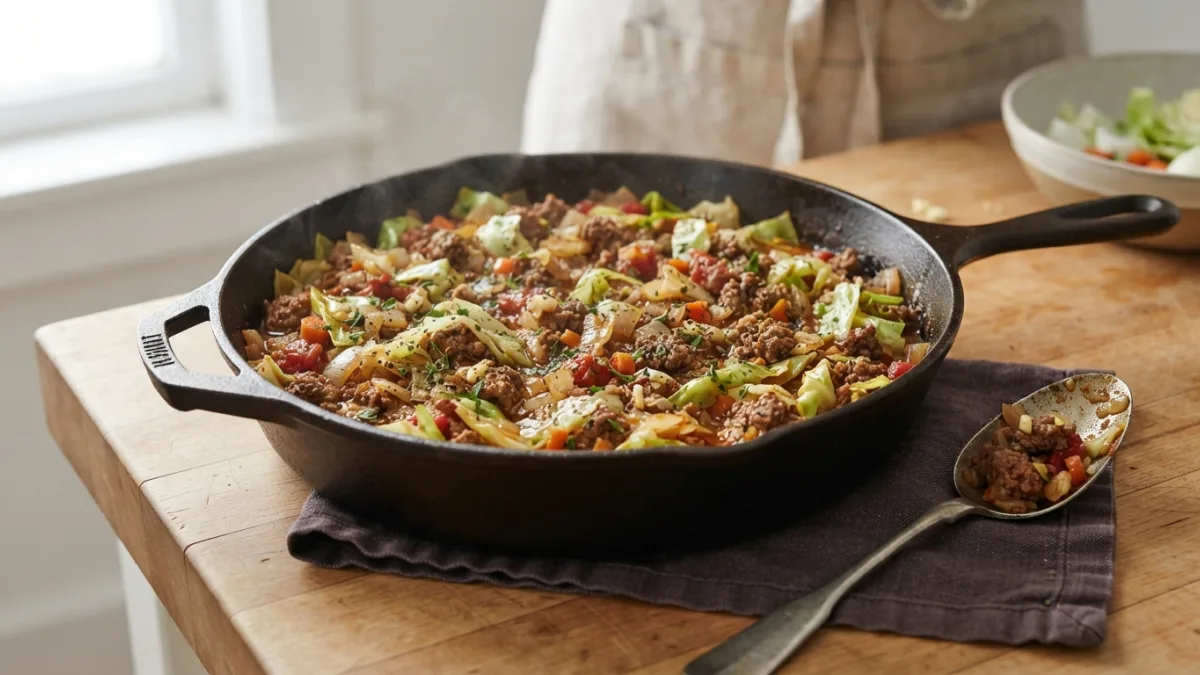
Weeknight dinner shouldn’t need three pans and a small miracle. A hot skillet of cabbage and ground beef gives you a savory, filling meal in about 30 minutes, with one pan to wash. It’s cheap, it’s forgiving, and it tastes like you worked harder than you did. The beef browns and picks up deep flavor, and the cabbage softens into sweet, silky ribbons that soak up every drop of juice. Even people who say they don’t like cabbage tend to go back for seconds. Below, you’ll find a simple recipe, five tips that make a real difference, and practical advice on nutrition, leftovers, and planning ahead.
Why This Skillet Beats Most Weeknight Plans
Among one pan dinner ideas, this one is hard to beat. You need only a handful of grocery-store basics: a head of cabbage, a pound of beef, an onion, and a few pantry staples. Nothing needs marinating, and nothing needs a special trip to the store. A whole head of cabbage is inexpensive and keeps well in the fridge for a long time, so you can stash one away for a busy night. The dish also bends to whatever you have on hand. Swap the spices, stir in tomatoes, or add a splash of soy sauce, and you get a different dinner each time. That flexibility is why so many home cooks keep coming back to cabbage and ground beef. If you want to dig deeper, our guide on Ground Beef and Rice: 5 Easy Steps for Quick Dinner covers this in more detail.
The 30-Minute Recipe: Ingredients and Steps
This version serves four and fits a large, deep 12-inch skillet. Gather everything before you turn on the heat, because the cooking moves fast.
- 1 pound (450 g) ground beef
- 1 small head green cabbage, about 1.5 pounds (700 g)
- 1 medium onion, diced
- 3 cloves garlic, minced
- 1 tablespoon oil, only if your beef is very lean
- 2 tablespoons tomato paste
- ½ cup (120 ml) beef broth or water
- 1 tablespoon soy sauce or Worcestershire sauce
- 1 teaspoon paprika, 1 teaspoon garlic powder, ½ teaspoon cumin, ½ teaspoon black pepper, and salt to taste
- A splash of vinegar or a squeeze of lemon to finish
Follow these steps, and dinner lands on the table in half an hour:
- Chop the cabbage and dice the onion (8 minutes).
- Brown the beef over medium-high heat until no pink remains, then spoon off extra fat (7 minutes).
- Add the onion and cook until soft, then stir in the garlic, tomato paste, and spices for one minute.
- Add the cabbage in two batches, pour in the broth and soy sauce, and cover the pan (5 minutes).
- Uncover, stir, and cook until the cabbage is tender but still has a little bite (5 minutes). Finish with vinegar or lemon.
5 Easy Tips for Cooking Cabbage and Ground Beef
The recipe is simple, but small habits separate a great skillet from a watery one. These five tips cover the biggest wins.
Tip 1: Learn How to Chop Cabbage for Even Cooking
Knowing how to chop cabbage saves you from a skillet full of raw chunks and mushy shreds. Peel off any tired outer leaves first. Set the head on a cutting board, cut it in half through the stem, then cut each half into wedges. Slice out the hard white core from each wedge at an angle. Now lay a wedge flat and slice it into ribbons about ½ inch (1 cm) wide. If the ribbons are very long, cut them once across so they fit on a fork. Aim for pieces of similar size, because uneven pieces cook at different speeds. Thinner cuts turn silky fast, while thicker ones keep more crunch. This connects closely with another common issue — see Creamy Tomato Gnocchi: 5 Easy Steps for One-Pan Dinner for more on that.
Tip 2: Build a Ground Beef Seasoning Blend Ahead of Time
A ready-made ground beef seasoning blend turns a plain pound of meat into dinner in seconds. Mix paprika, garlic powder, onion powder, cumin, black pepper, and salt in a small jar, then shake it over the pan whenever you need it. Season the beef after it starts to brown, not before, so it sears instead of steaming. Let it sit untouched for a minute or two between stirs, since those browned bits add real flavor. Cook ground beef until it reaches 160°F (71°C), the safe temperature the USDA Food Safety and Inspection Service recommends. Drain extra grease before adding the vegetables.
Tip 3: Add the Cabbage in Batches
Cabbage and ground beef cook best when the pan never feels crowded. A full head looks enormous, but it shrinks fast. Add half the ribbons, stir until they begin to wilt, then add the rest. Cover the skillet for the first few minutes so the steam softens the leaves quickly. Then take the lid off, because you want extra moisture to evaporate and the edges to pick up a little color. If the pan looks dry, add a splash of broth rather than a big pour. A small amount of liquid makes a glossy sauce, while too much turns the dish into soup.
Tip 4: Finish with Acid and Heat
Rich beef and sweet cabbage need a bright finish. Right before serving, stir in a teaspoon or two of apple cider vinegar, rice vinegar, or fresh lemon juice. Taste it, then add a little more if it still tastes flat. Many cooks stop at salt, but acid is often the missing piece. A pinch of red pepper flakes or a few drops of hot sauce adds a gentle kick. For freshness, scatter sliced scallions, parsley, or dill on top. These last-minute touches take ten seconds and make the whole skillet taste sharper, cleaner, and more like a restaurant dish.
Tip 5: Plan What to Serve with Cabbage and Ground Beef
Decide what to serve with cabbage before you start cooking, so everything lands on the table together. Steamed rice is the classic choice, and it soaks up the savory juices well. Mashed potatoes or buttered egg noodles turn the skillet into comfort food. Crusty bread works for mopping the pan, and a fried egg on top adds richness. Want something lighter? Pair it with a cucumber salad or sliced tomatoes. If you’re skipping starch altogether, the skillet is hearty enough to stand alone in a bowl. Add a dollop of sour cream or plain yogurt, and you have a complete dinner. You might also find our article on Sausage and Vegetables: 5 Easy Tips for a Sheet Pan Dinner helpful here.
Low Carb Skillet Meals Without the Fuss
If you like low carb skillet meals, this dish is an easy fit. Cabbage is a low-carb vegetable, and beef has no carbs at all, so the base is naturally light on them. Most of the carbs come from the extras, such as tomato paste, onion, and anything you serve on the side. Skip the rice and spoon the skillet into a bowl, or top it with melted cheese for extra richness. Keep an eye on sauces, since some brands of soy sauce, ketchup, and barbecue sauce contain added sugar. Check labels if you’re counting carbs closely, because the totals change with every ingredient swap.
Cabbage Skillet Nutrition Facts: What to Expect
Exact cabbage skillet nutrition facts depend on your beef and your add-ins, so treat any number you see online as an estimate. In general, cabbage brings fiber, vitamin C, and vitamin K with very few calories. Beef adds protein, iron, and vitamin B12. The biggest swing comes from the fat content of the meat: leaner beef lowers the fat, while a fattier grind makes a richer dish. Draining the pan helps if you want to trim fat. For a closer look at specific ingredients, search the USDA’s FoodData Central database, then add up your own recipe. That way, you work from your actual ingredients instead of guesses.
Storing Leftover Skillet Dinner Safely
Storing leftover skillet dinner the right way keeps it tasty and safe. Cool the food quickly, and get it into the fridge within two hours of cooking. Use shallow airtight containers so the heat escapes fast. Cooked leftovers generally keep for three to four days in the refrigerator, according to USDA guidance. You can also freeze portions for longer storage, though the cabbage will turn softer after thawing. Reheat until the food is steaming hot, ideally to 165°F (74°C). A splash of water or broth in the pan brings back moisture, and a squeeze of lemon wakes up the flavor after a few days in the fridge.
Meal Prep Beef Recipes: Make This One Work All Week
Among meal prep beef recipes, this skillet is one of the easiest to scale. Double the batch on Sunday and cook the cabbage a little firmer than usual, since it softens more during reheating. Divide it into containers with your choice of rice, potatoes, or nothing at all. Leftovers also change shape easily. Wrap them in a tortilla, stuff them into bell peppers, spoon them over a baked potato, or fold them into an omelet. If you plan to freeze portions, label them with the date. A few minutes of planning gives you several lunches and dinners that need nothing more than a microwave. For a related walkthrough, check out One Pot Chicken Orzo: 5 Easy Tips for a Perfect Dinner.
Final Thoughts on This Easy Skillet Dinner
Good cooking doesn’t have to be complicated. With a sharp knife, a big pan, and a bit of patience, cabbage and ground beef becomes a dependable dinner you can make from memory. Cut the cabbage evenly, brown the beef well, work in batches, and finish with something bright. Those habits matter more than any fancy ingredient. Once you’ve made it a couple of times, you’ll start adjusting the spices and add-ins to suit your own taste. Keep one head of cabbage and a pound of beef on hand, and you’ll always have a dinner plan that takes about half an hour.
FAQ
Can I use ground turkey or chicken instead of beef?
Yes. Ground turkey and chicken work well. They’re leaner, so add a tablespoon of oil to the pan and cook the meat until it reaches 165°F (74°C).
How do I keep the skillet from getting watery?
Add the cabbage in batches, use only a small amount of broth, and remove the lid for the last few minutes. This lets extra moisture cook off.
Can I use bagged coleslaw mix to save time?
You can. It saves chopping time, though the pieces are thin and cook faster. Add it near the end and cook for just a few minutes.
Is cabbage and ground beef good for a low-carb diet?
It can be. Both main ingredients are low in carbs, but check sauces, tomato paste, and side dishes, since they can add up.
How long does the leftover skillet last in the fridge?
Plan on three to four days in an airtight container. Reheat it until steaming hot, and freeze portions if you won’t finish them in time.

Ghani Mejber — Founder & Lead Editor
Ghani Mejber is a home cook and the creator of The Quick Pantry. He specializes in simple, budget-friendly weeknight meals, one-pot dinners, and reliable meal-prep strategies designed for busy people who want delicious, comforting food without spending hours in the kitchen.