Sheet-Pan Salmon and Vegetables in 25 Minutes
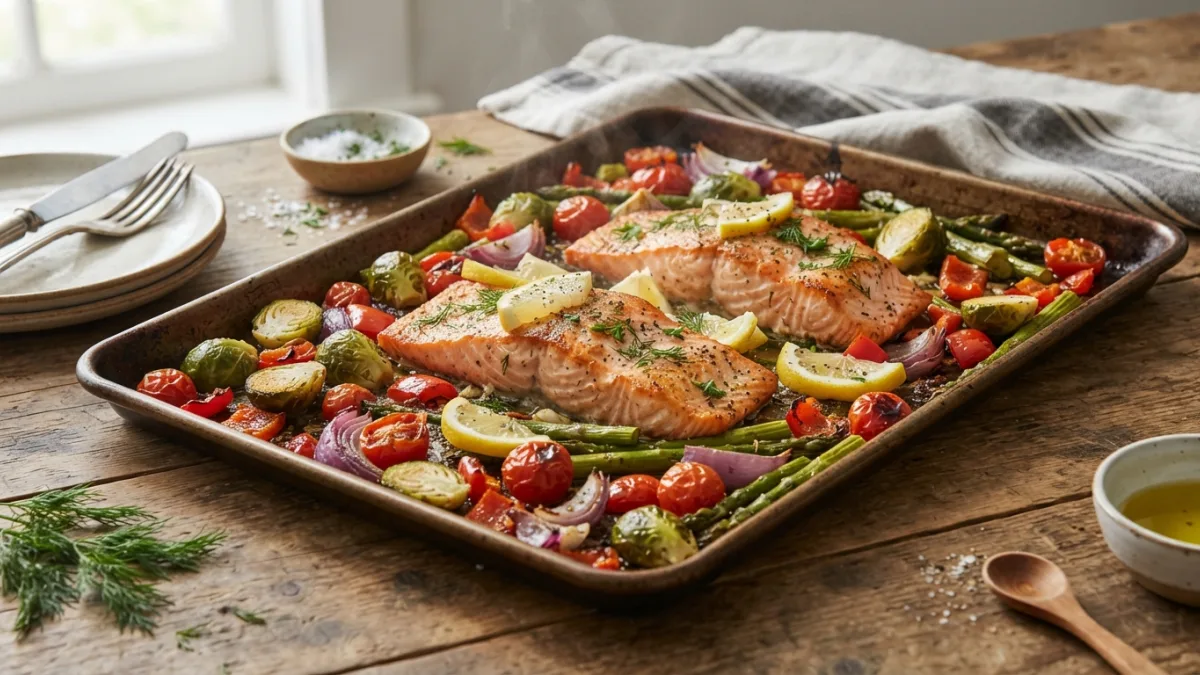
Some nights call for a dinner that comes together fast without sacrificing flavor or nutrition, and that’s exactly what sheet-pan salmon and vegetables delivers. In about 25 minutes, you can have a complete, colorful meal ready to serve, using just one pan and a handful of ingredients you probably already have. This kind of sheet pan dinner has become a weeknight favorite for home cooks who want something healthy but don’t have hours to spend in the kitchen.
Why Sheet-Pan Salmon and Vegetables Works for Busy Nights
The appeal of this dish goes beyond speed. Salmon and vegetables cook at similar temperatures, so they roast together beautifully without one overcooking while the other lags behind. You get a protein-rich, vegetable-packed plate with almost no cleanup, since everything roasts on a single tray. It’s also flexible: swap in whatever vegetables are in season or sitting in your fridge, and the recipe still works. For anyone trying to eat healthier without spending extra time meal planning, this one pan meal checks nearly every box. It’s the kind of easy salmon recipe that fits into a realistic weeknight routine, not just an idealized one. If you want to dig deeper, our guide on 10 Sheet-Pan Dinners for Busy Weeknights covers this in more detail. This is a common part of dealing with sheet-pan salmon and vegetables, and it is worth keeping in mind.
Step 1: Preheat the Oven and Prep Your Pan
Start by preheating your oven to around 400 to 425 degrees Fahrenheit. A higher temperature helps the vegetables caramelize quickly while giving the salmon a nice edge without drying it out. While the oven heats, line a large rimmed baking sheet with parchment paper or foil. This small step saves you scrubbing time later and helps prevent sticking, especially with flakier fish like salmon. If you have two smaller pans instead of one large one, that works too, just make sure everything has enough room to roast rather than steam. Crowding the pan is one of the most common reasons vegetables turn soggy instead of crisp. Many people run into this exact issue with sheet-pan salmon and vegetables at some point.
Step 2: Choose and Season Your Salmon
Fresh or thawed salmon fillets work best for even cooking, and skin-on pieces tend to hold together better on a hot pan. Pat the fillets dry with a paper towel before seasoning, since excess moisture can prevent a good sear on top. A simple combination of olive oil, salt, pepper, garlic, and a squeeze of lemon is often all you need. If you want more depth, try adding smoked paprika, dill, or a light drizzle of honey mustard. According to FDA guidance on eating fish, salmon is considered a good choice for regular consumption thanks to its favorable nutrition profile and lower mercury levels compared to some other seafood. Keeping sheet-pan salmon and vegetables in mind here will save you time later on.
Step 3: Cut Vegetables for Even, Quick Roasting
The secret to quick roasted vegetables is cutting them into similar, bite-sized pieces so they cook at the same rate. Good options for a 25-minute timeline include: This connects closely with another common issue — see 15 Weeknight Dinners Ready in 30 Minutes or Less for more on that. This detail matters more than it seems once sheet-pan salmon and vegetables comes up again.
- Broccoli florets, cut small and uniform
- Asparagus spears, trimmed and left whole
- Cherry tomatoes, left whole to burst while roasting
- Thinly sliced bell peppers
- Zucchini or yellow squash, cut into half-moons
Denser vegetables like potatoes or carrots need a head start, so if you want to include them, parboil them for a few minutes first or cut them noticeably smaller than the rest. Tossing the vegetables in olive oil, salt, and pepper before they hit the pan ensures even seasoning and better browning. It is one of those small things that makes sheet-pan salmon and vegetables easier to manage overall.
Step 4: Arrange the Sheet-Pan Salmon and Vegetables Together
Once your oven is hot, arrange the vegetables around the edges of the pan and place the salmon fillets in the center. This layout matters more than it seems, since salmon usually needs slightly less time than heartier vegetables, and keeping it central makes it easier to remove first if necessary. Give each piece a little breathing room rather than piling everything together. If the pan looks crowded, split the ingredients across two trays instead of forcing it all onto one. Roast everything for about 12 to 15 minutes, depending on the thickness of your salmon and how tender you like your vegetables. This is a common part of dealing with sheet-pan salmon and vegetables, and it is worth keeping in mind.
Step 5: Check for Doneness and Serve
Salmon is done when it flakes easily with a fork and reaches an internal temperature of 145 degrees Fahrenheit, according to general food safety guidance from the FDA’s fish safety recommendations. Vegetables should be tender with lightly browned edges, not mushy. If the vegetables need a few extra minutes while the salmon is already done, simply move the fish to a plate and let the vegetables finish roasting alone. Finish the dish with a squeeze of fresh lemon juice, a sprinkle of herbs, or a light drizzle of good olive oil right before serving. This final touch adds brightness without adding much time or effort. You might also find our article on Canned Beans 101: Quick Recipes and Storage Tips helpful here. Many people run into this exact issue with sheet-pan salmon and vegetables at some point.
Tips to Customize Your Sheet Pan Dinner
Once you’ve made this dish a few times, it’s easy to start adjusting it to fit your taste or what’s in your kitchen. Try swapping lemon and dill for a soy-ginger glaze, or use a Mediterranean mix of olives, feta, and cherry tomatoes for a different flavor direction. You can also change the vegetables based on the season, using Brussels sprouts and butternut squash in the fall or thin green beans and radishes in the spring. Keep portion sizes balanced by including at least two cups of vegetables per person, which aligns with general guidance from MyPlate’s recommendations on vegetable intake. Small changes like these keep the recipe from feeling repetitive, even if you make it weekly. Keeping sheet-pan salmon and vegetables in mind here will save you time later on.
Why This Recipe Supports a Healthy Weeknight Meal
Salmon is well known for its omega-3 fatty acid content, which is linked to heart and brain health benefits, according to the Harvard T.H. Chan School of Public Health’s overview of omega-3 fats. Pairing it with a generous portion of roasted vegetables adds fiber, vitamins, and minerals without extra prep work. Because everything cooks in one pan with minimal added fat, this meal naturally stays lighter than many takeout or packaged alternatives. For anyone trying to eat more balanced meals during a busy week, this dish offers a realistic way to combine protein and vegetables without extra planning or multiple pots and pans. This detail matters more than it seems once sheet-pan salmon and vegetables comes up again.
Storing and Reheating Leftovers
If you have leftovers, store the salmon and vegetables in an airtight container in the refrigerator for up to three days. Reheat gently in the oven or a covered skillet on low heat to avoid drying out the fish, since microwaving can sometimes make salmon rubbery. Leftover sheet-pan salmon and vegetables also work well cold, tossed into a grain bowl or salad the next day. This makes the recipe useful not just for dinner, but for a quick lunch option too, stretching one cooking session into two meals with almost no extra effort. For a related walkthrough, check out A Beginner's Guide to Sunday Meal Prep. It is one of those small things that makes sheet-pan salmon and vegetables easier to manage overall.
Frequently Asked Questions
How do I know when salmon is fully cooked?
Salmon is done when it flakes easily with a fork and turns opaque throughout. An internal temperature of 145 degrees Fahrenheit is the standard safety benchmark. This is a common part of dealing with sheet-pan salmon and vegetables, and it is worth keeping in mind.
Can I use frozen salmon for this recipe?
Yes, but thaw it fully in the refrigerator first so it cooks evenly alongside the vegetables within the 25-minute timeframe. Many people run into this exact issue with sheet-pan salmon and vegetables at some point.
What vegetables roast fastest for a sheet pan dinner?
Asparagus, cherry tomatoes, zucchini, and bell peppers roast quickly and pair well with salmon’s shorter cooking time. Keeping sheet-pan salmon and vegetables in mind here will save you time later on.
Do I need to flip the salmon while it roasts?
No, salmon fillets generally don’t need flipping in the oven since they cook evenly from the top and bottom heat.
Can I make this recipe dairy-free or low-carb?
Yes, this dish is naturally dairy-free, and it’s easy to keep low-carb by choosing non-starchy vegetables like broccoli, zucchini, or asparagus.