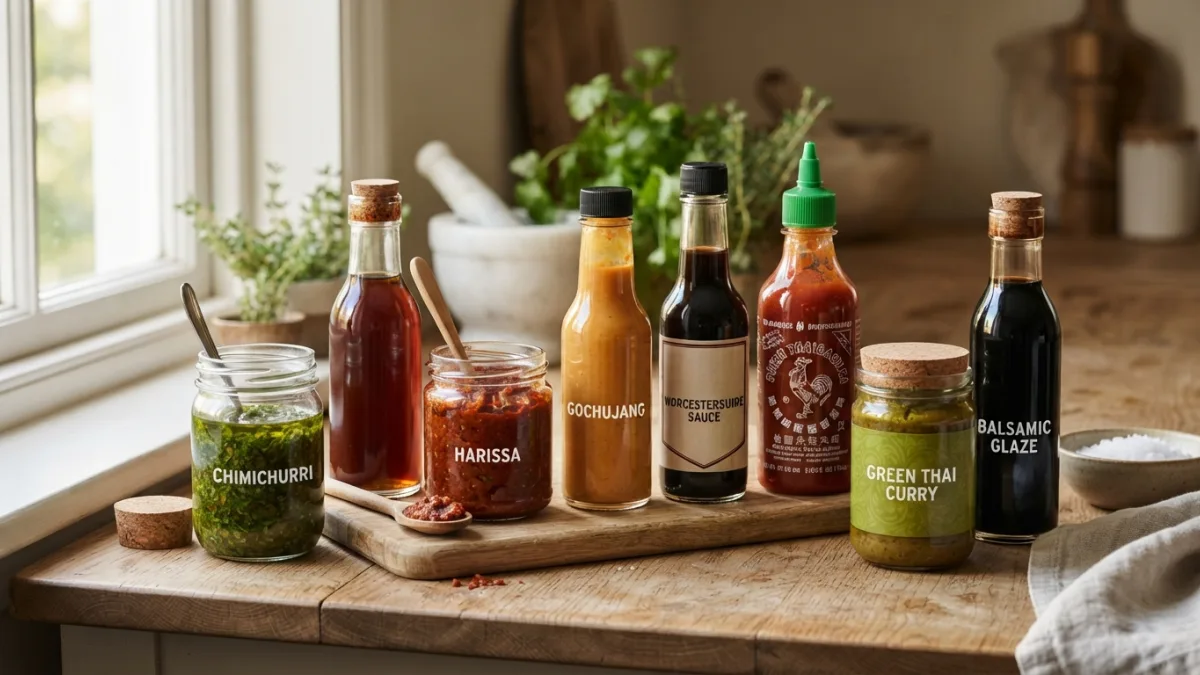
Global Sauces: 7 Best Bottles to Keep Stocked
Open a random kitchen cabinet in Seoul, Bangkok, or Buenos Aires, and you’ll likely find a bottle that does the heavy lifting for almost every meal. That’s the secret ingredient home cooks around the world already know: global sauces turn plain rice, noodles, or roasted vegetables into something craveable in under a minute. You don’t need a spice rack the size of a library or hours of prep time to eat well on a weeknight. A handful of well-chosen bottles, kept in the fridge or pantry, can carry you through busy weeknights, lazy Sundays, and everything in between. This guide rounds up seven sauces worth keeping on hand, explains why they work, and shows how to use them without overthinking dinner.
Why Global Sauces Deserve a Permanent Spot in Your Pantry
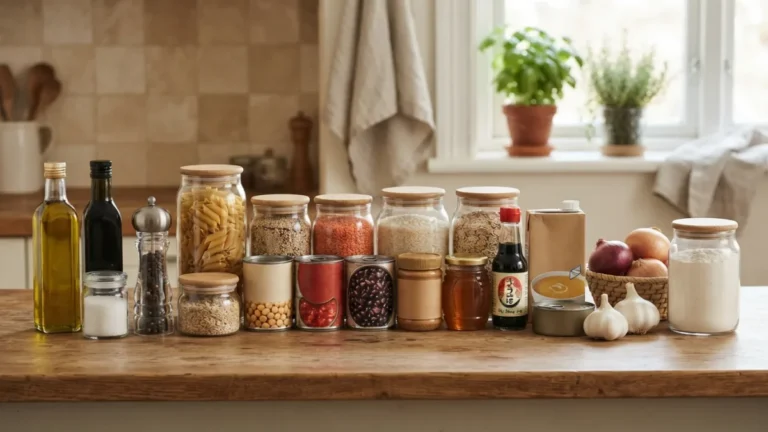
Restaurant chefs and home cooks share one trick: they let condiments do the work that would otherwise take a dozen separate ingredients. A spoonful of the right sauce brings acid, salt, heat, and depth all at once, which means fewer bottles of oil, vinegar, and spice to measure out for quick weeknight meals. Most of these bottles also last for months in the fridge, so a shelf of global sauces counts as a genuine set of pantry staples rather than something you buy once and forget. Keeping a small lineup of international condiments nearby also makes cooking less stressful, because dinner stops depending on a long grocery list. Instead, you build meals around whatever protein or vegetable you already have on hand, then finish it with a sauce that adds instant character. Think of these bottles as flavor boosters you can lean on whenever time, energy, or inspiration runs short. If you want to dig deeper, our guide on 20 Pantry Staples Every Quick-Cooking Kitchen Needs covers this in more detail. This is a common part of dealing with global sauces, and it is worth keeping in mind.
7 Global Sauces to Keep Stocked for Fast Flavor
1. Soy Sauce
Soy sauce is probably the single most useful bottle on this list, and it earns that spot honestly. Made from fermented soybeans, wheat, and salt, it brings deep umami to marinades, stir-fries, dipping sauces, and even scrambled eggs. A splash replaces a chunk of the salt and sugar many recipes call for, since it already balances salty, slightly sweet, and savory notes in one pour. Because sodium adds up quickly, it helps to check labels and consider a reduced-sodium version, especially if you use it daily; the Harvard T.H. Chan School of Public Health notes that most people consume more sodium than recommended. Keep a bottle near the stove, not tucked away in a cabinet, because you’ll reach for it constantly once you start cooking with it regularly. This connects closely with another common issue — see 5-Minute Overnight Oats: 3 Flavor Combinations for more on that. Many people run into this exact issue with global sauces at some point.
2. Sriracha
Sriracha, the garlicky, tangy chili sauce that started in Thailand before becoming a global condiment shelf regular, adds heat without overwhelming a dish. Unlike some hot sauces that taste purely of fire, sriracha balances vinegar, sugar, and garlic, so it works as a finishing touch rather than just a dare. Stir it into mayonnaise for a quick sandwich spread, swirl it into soup, or drizzle it over eggs, noodles, or roasted potatoes. It also blends smoothly into dressings and marinades, since the texture is thinner than most chili pastes. Because a little goes a long way, one bottle tends to last for months, making it one of the more economical flavor boosters around. Keep it in the fridge after opening to preserve its color and punch. You might also find our article on Canned Beans 101: Quick Recipes and Storage Tips helpful here. Keeping global sauces in mind here will save you time later on.
3. Harissa
Harissa, a chili paste from North Africa built on roasted peppers, garlic, and warm spices like cumin and coriander, brings smoky heat rather than sharp burn. Traditionally central to Tunisian cooking, it now shows up in supermarkets everywhere as a shortcut to complex flavor. Stir a spoonful into yogurt for an instant dip, rub it onto chicken or vegetables before roasting, or fold it into soups and stews for extra depth. Because the spice blend already does so much work, you can skip reaching for five separate jars of ground spices. Harissa also freezes well in small portions, so buying a jar you won’t finish quickly isn’t a waste. It’s a strong choice for anyone who wants bold flavor without learning a whole new spice cabinet from scratch. For a related walkthrough, check out How to Build a Freezer-Friendly Pantry. This detail matters more than it seems once global sauces comes up again.
4. Gochujang
Gochujang is a thick, fermented Korean chili paste that tastes sweet, salty, and spicy all at once, with a stickiness that clings nicely to whatever it touches. Traditionally made from glutinous rice, fermented soybeans, and red chili powder, it has become one of the more popular international condiments outside Korea over the past decade. Whisk it with a little sesame oil and rice vinegar for an instant marinade, stir it into soups for warmth, or mix it into ground meat before shaping burgers or meatballs. It also makes a fantastic glaze for roasted vegetables or salmon, caramelizing slightly under heat. A single tub lasts a long time in the fridge, and its flavor only gets more interesting the longer it sits after opening. It is one of those small things that makes global sauces easier to manage overall.
5. Chimichurri
Chimichurri, the bright green herb sauce from Argentina and Uruguay, is built from parsley, garlic, vinegar, and olive oil, sometimes with a pinch of chili flakes. Unlike the fermented or cooked sauces on this list, it tastes fresh and sharp, closer to a loose pesto than a paste. It was designed for grilled meat, but it works just as well spooned over roasted potatoes, grain bowls, or scrambled eggs. Because it relies on fresh herbs, homemade versions taste best within a few days, though jarred versions last much longer in the fridge and still bring plenty of brightness. Keep it around when gr