Frozen Vegetables: 7 Best Types for Quick Weeknight Meals
It’s 6:40 p.m., you’re tired, and the crisper drawer holds one limp carrot. Then you remember the bag of frozen vegetables sitting at the back of the freezer. That bag may be the most underrated tool in your kitchen. It needs no washing, no chopping, and no guilt about waste. You can scoop out exactly what you need and put the rest back for another night. Some types cook in minutes, and some taste almost as good as fresh. Others turn to mush if you treat them the wrong way. This guide covers the seven best picks, how to cook them well, and how to keep your freezer stocked.
Frozen vs Fresh Vegetables: What Really Differs?
Many shoppers still feel that fresh always beats frozen, but the picture is more balanced. Frozen vegetables are usually picked at peak ripeness and processed soon after harvest, often with a quick blanch before freezing. Fresh produce, on the other hand, may spend days in trucks, warehouses, and store displays before you cook it. The real difference shows up in texture and price. Fresh vegetables win in salads and raw snacks, where crunch matters. Frozen ones tend to be softer after cooking, so they shine in soups, stir-fries, sauces, and casseroles. They also cost less per serving in many stores, and they rarely spoil before you use them. If you want to dig deeper, our guide on Canned Beans 101: Quick Recipes and Storage Tips covers this in more detail.
Frozen Vegetable Nutrition: What You Keep and What to Watch
When people ask about frozen vegetable nutrition, the short answer is reassuring. Freezing locks in much of a vegetable’s goodness, and plain frozen vegetables count toward your daily intake just like fresh ones. The MyPlate vegetables guide from the U.S. Department of Agriculture says that frozen options are a good choice. Blanching before freezing can reduce some water-soluble vitamins, but fresh produce also loses nutrients as it sits around. The bigger issue is what gets added. Read the label and look for bags that list only the vegetable. Buttery sauces, heavy seasoning, and extra salt can turn a simple side into something else entirely.
The 7 Best Frozen Vegetables for Weeknight Cooking
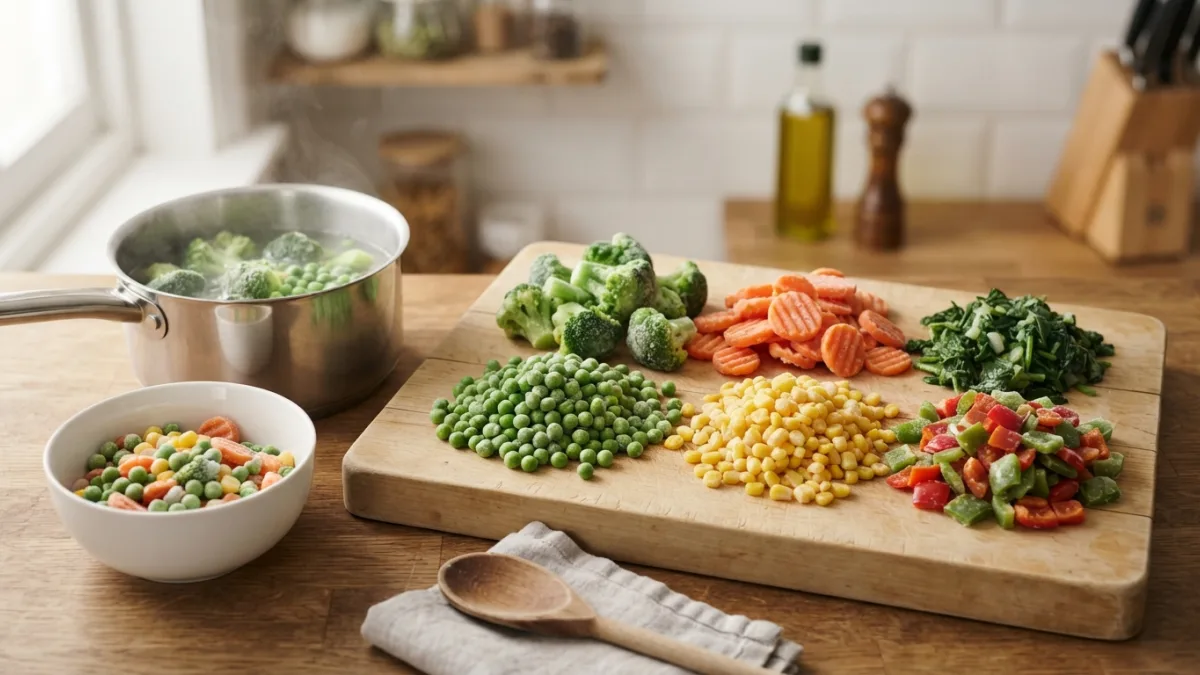
When you need quick weeknight dinners, not every bag in the freezer aisle deserves a spot in your cart. The best frozen vegetables hold their shape, cook fast, and fit into many recipes. I chose the seven below for speed, flavor, and flexibility. Each one works straight from the freezer, so you can skip thawing. After the list, you’ll find a quick comparison table, then tips for cooking and storing them well.
1. Green Peas
Peas are the champion of frozen produce. They stay sweet and bright, and they need barely any cooking. Because they arrive already tender, a minute or two in hot water or a warm pan is enough. Stir them into pasta, fried rice, risotto, or mac and cheese during the last moments of cooking. They also blend well into soups and dips for a fresh green color. Skip long boiling, which turns them gray and mushy. If you only buy one bag this week, make it peas. They also make a great cold snack on a hot day, straight from the freezer.
2. Chopped Spinach
Frozen spinach packs a lot of leafy greens into a small block. It melts into hot dishes, so it works best in recipes where texture isn’t the star. Add it to scrambled eggs, lasagna, curries, quesadillas, or creamy pasta sauces. One trick makes a big difference: thaw it, then squeeze out the extra water with your hands or a clean towel. Otherwise, it can thin out your sauce. A little garlic and lemon juice wake up the flavor fast. Because it keeps well, spinach also makes a handy backup when the fresh bag in your fridge has already wilted. This connects closely with another common issue — see Canned Coconut Milk: 12 Quick and Easy Recipes to Try for more on that.
3. Broccoli Florets
Broccoli is a weeknight workhorse. Frozen florets come already cut, which saves real time on busy evenings. They suit stir-fries, pasta bakes, soups, and simple side dishes with garlic and olive oil. Cook them until they’re bright green and just tender, because overcooking brings out a strong, sulfur-like smell that many people dislike. Roast them for browned edges, or sauté them in a hot pan with a splash of soy sauce. Cheese sauce on top turns them into a kid-friendly side. Frozen broccoli will not stay crunchy like fresh, but the flavor holds up well.
4. Sweet Corn
Corn kernels bring sweetness and color to almost any plate. Scatter them into chili, tacos, salads, chowders, or rice bowls, and you instantly add texture. They thaw quickly, so you can even stir them in cold at the end of cooking. For extra flavor, toss them in a dry skillet over high heat until a few kernels turn golden and slightly charred. That small step gives a “grilled” taste without a grill. Add lime, chili powder, and a little cheese, and you have a simple side that feels special. Corn also keeps well in the freezer, which makes it a smart pantry staple.
5. Green Beans
Green beans are great steam in bag veggies, because they cook evenly and stay pleasantly firm. Many brands sell them in microwave-ready pouches, so dinner sides take almost no effort. If you buy a regular bag, you can sauté the beans with garlic, add them to a sheet-pan meal, or simmer them in a stew. Finish with lemon zest, toasted nuts, or a spoonful of mustard to lift the flavor. Look for whole or cut beans without sauce if you want more control. They won’t snap like fresh ones, but they’re reliable, mild, and easy to like.
6. Cauliflower (Florets and Riced)
Roasting frozen vegetables works especially well with cauliflower, which browns nicely and develops a nutty taste. Spread the florets on a hot, oiled pan, add spices like cumin or paprika, and let the oven do the work. Riced cauliflower is another smart buy. Sauté it for a quick low-carb side, or mix it into burrito bowls and fried “rice.” Both forms release some water as they cook, so give them space and high heat. Mashed cauliflower with garlic and butter is a quick substitute when you’re out of potatoes. It is mild, so bold sauces and seasonings work best. You might also find our article on Canned Chicken Recipes: 12 Quick, Easy Lunch & Dinner Ideas helpful here.
7. Stir-Fry Vegetable Mix
A good stir fry vegetable mix is a dinner shortcut in a bag. Most blends combine broccoli, carrots, snap peas, peppers, and onions, so you get variety without buying five separate items. Heat a wide pan until it’s very hot, add a little oil, and cook the mix straight from frozen. Add cooked chicken, tofu, shrimp, or eggs, then pour in a sauce made from soy sauce, garlic, and ginger. Serve it over rice or noodles. Check the ingredient list, because some mixes include sauce packets that are high in salt. Plain blends give you more flexibility and better control.
Quick Comparison of the Seven Picks
| Vegetable | Best For | Easy Cooking Method |
|---|---|---|
| Green peas | Pasta, rice, soups | Warm briefly at the end |
| Chopped spinach | Eggs, sauces, bakes | Thaw and squeeze dry |
| Broccoli florets | Stir-fries, sides, casseroles | Roast or sauté |
| Sweet corn | Chili, tacos, salads | Char in a dry skillet |
| Green beans | Sides, sheet-pan meals | Steam or sauté |
| Cauliflower | Roasting, rice bowls, mash | Roast on high heat |
| Stir-fry mix | Noodles, rice dishes | Cook in a very hot pan |
How to Avoid Soggy Vegetables
The biggest complaint about frozen produce is mushiness, and you can fix it with a few habits. To avoid soggy vegetables, remember that ice crystals melt into water as the food heats. Your job is to get that water out of the way quickly. Follow these simple rules:
- Use high heat. A hot pan or oven helps moisture evaporate instead of pooling.
- Don’t crowd the pan. Overlapping pieces steam each other and turn limp.
- Skip the thaw for most vegetables. Thawing first often makes them wetter.
- Pat dry when needed. This is especially helpful for spinach and riced cauliflower.
- Season at the end. Salt draws out water, so add it late.
Cooking in two batches may take a few extra minutes, but the browning is worth it. With roasting, preheat the baking sheet too, so the vegetables sizzle on contact. These small changes can make frozen vegetables taste far better than most people expect.
Freezer Storage Tips to Keep Your Stash Fresh
Good freezer storage tips protect both flavor and texture. Keep your freezer at a steady, cold temperature, and press air out of opened bags before sealing them tightly. Clip the bag shut or move leftovers into an airtight container to prevent freezer burn, which leaves dry, pale patches on the food. Write the date on the bag so you use older packages first. If a bag has thawed and refrozen into one solid block, the quality has probably dropped, so be cautious. For safety guidance, the U.S. government’s FoodSafety.gov site covers storage and handling basics. If you want to learn how blanching works, this Wikipedia overview of blanching explains it clearly. For a related walkthrough, check out 20 Pantry Staples Every Quick-Cooking Kitchen Needs.
Make Frozen Vegetables Your Weeknight Habit
Stock a few bags, and your next rushed evening gets much easier. Peas, spinach, broccoli, corn, green beans, cauliflower, and a stir-fry blend cover almost every kind of meal. Pair them with eggs, canned beans, rice, pasta, or leftover chicken, and you can have a real dinner on the table in the time it takes to boil water. These quick weeknight dinners don’t need fancy skills. They need heat, a little seasoning, and a good plan. Start by trying one new vegetable this week. Once you see how much time you save, the freezer aisle might become your favorite part of the grocery store.
FAQ: Frozen Vegetables and Weeknight Cooking
Do I need to thaw frozen vegetables before cooking?
Usually not. Most vegetables cook well straight from the freezer, and thawing first can make them watery. The main exception is spinach, which you should thaw and squeeze dry for most recipes.
Are frozen vegetables healthy?
Yes, plain frozen vegetables are a healthy choice and count toward your daily vegetable intake. Pick bags with no added sauces, and check the label for extra salt or fat.
What is the fastest way to cook frozen vegetables?
Microwaving or steaming is the quickest. A hot skillet is also fast, and it adds better flavor and browning than the microwave.
Why do my frozen vegetables turn out mushy?
Mushiness usually comes from low heat, a crowded pan, or overcooking. Use high heat, give the vegetables space, and stop cooking when they are just tender.
How long can I keep frozen vegetables?
They stay safe for a long time if kept constantly frozen, but quality slowly declines. Check the package for the best-by date, and seal opened bags tightly to protect the taste and texture.

Ghani Mejber — Founder & Lead Editor
Ghani Mejber is a home cook and the creator of The Quick Pantry. He specializes in simple, budget-friendly weeknight meals, one-pot dinners, and reliable meal-prep strategies designed for busy people who want delicious, comforting food without spending hours in the kitchen.