Ingredient Substitution Chart: 10 Essential Recipe Swaps
Ever started a recipe, gotten halfway through the ingredient list, and realized you’re out of buttermilk, eggs, or brown sugar? You’re not alone, and you don’t need to make an emergency grocery run every time this happens. A good ingredient substitution chart can save your dish, your evening, and your sanity by showing you exactly what’s already sitting in your pantry that can do the job just as well.
Cooking is far more flexible than most recipes let on. Chefs and home cooks have been swapping ingredients for centuries, whether out of necessity, dietary restrictions, or simple curiosity. Once you understand why an ingredient works in a recipe, whether it’s for moisture, structure, leavening, or flavor, you can confidently replace it with something else. Below, we’ve broken down ten of the most common kitchen dilemmas and the smartest substitutes for each one, so you can keep cooking without missing a beat. If you want to dig deeper, our guide on 20 Pantry Staples Every Quick-Cooking Kitchen Needs covers this in more detail.
The Ultimate Ingredient Substitution Chart: 10 Essential Recipe Swaps
1. Eggs in Baking
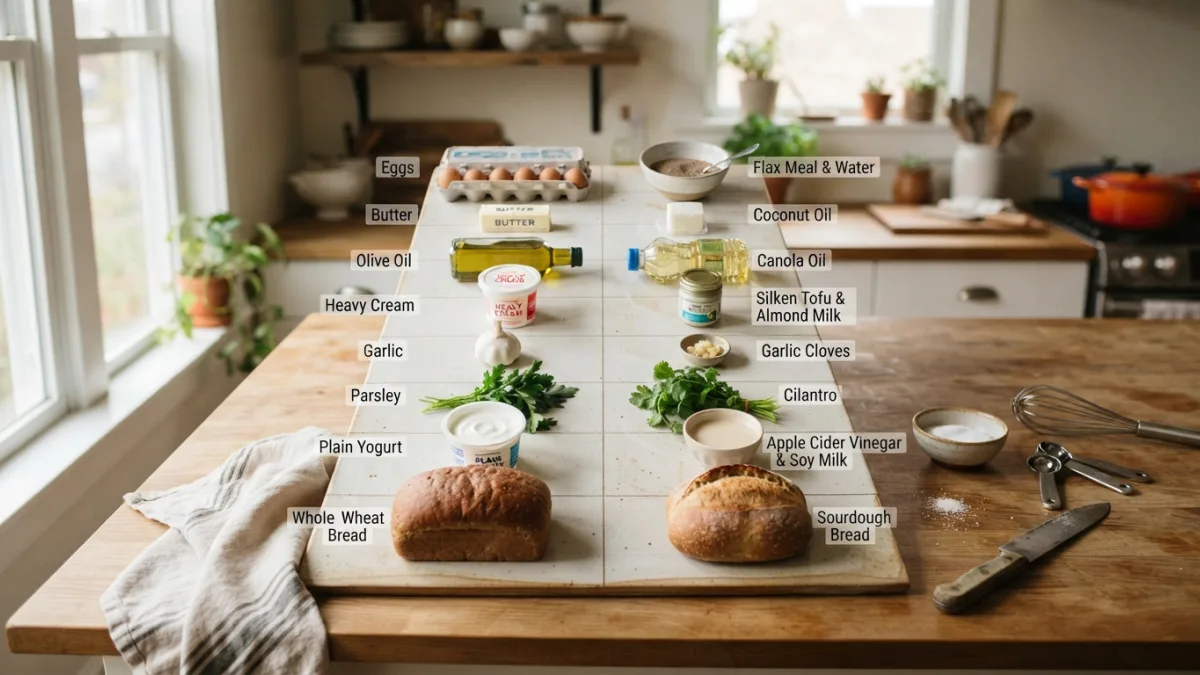
Running out of eggs is one of the most common baking emergencies, and thankfully, there are several reliable egg substitute options depending on what the egg is doing in your recipe. If it’s for binding, mashed banana or a flax egg works beautifully. If it’s for leavening in something light like a cake, a bit of extra baking powder combined with liquid can help. For richness in brownies or dense cakes, applesauce or plain yogurt does the trick. The right choice really depends on whether your recipe needs structure, moisture, or lift, so think about the eggs’ job before grabbing a substitute. You can learn more about how these work from this overview of common egg substitute ingredients.
2. Buttermilk for Baking and Marinades
Buttermilk adds tang and tenderness to pancakes, biscuits, and fried chicken, but it’s not always sitting in the fridge. A simple fix is mixing one tablespoon of lemon juice or white vinegar with a cup of regular milk, then letting it sit for five to ten minutes until it slightly curdles. Plain yogurt thinned with a little milk works just as well and adds a similar acidity. This is one of those common ingredient swaps that professional bakers rely on constantly, since the science behind buttermilk’s tenderizing effect comes down to acidity reacting with baking soda. If you’re curious about its origins, buttermilk’s traditional uses go back centuries in dairy farming culture.
3. Butter for Dairy-Free Baking
Whether you’re avoiding dairy for health reasons or simply ran out, butter has plenty of stand-ins. Coconut oil works well in cookies and pie crusts, though it can add a subtle coconut flavor. Vegetable oil or a neutral plant-based butter alternative blends easily into cakes and muffins without changing the texture much. For savory cooking, olive oil is a solid everyday choice. These dairy free alternatives have become much easier to find in grocery stores over the last decade, and many brands now make butter substitutes specifically formulated to match butter’s melting point, which matters a lot in laminated doughs like croissants or puff pastry.
4. Heavy Cream in Soups and Sauces
Heavy cream gives soups, sauces, and desserts their silky richness, but it’s easy to replace in a pinch. Whole milk mixed with a small amount of melted butter mimics the fat content reasonably well for cooking purposes. Evaporated milk is another excellent option, especially in soups, since it won’t curdle as easily under heat. For a lighter version, blended silken tofu or cashew cream works surprisingly well in both sweet and savory dishes, and it’s a favorite among those looking for plant-based options. Just keep in mind that these substitutes won’t whip into stiff peaks the way real heavy cream does, so they’re best for cooking rather than topping a pie. This connects closely with another common issue — see How to Build a Freezer-Friendly Pantry for more on that.
5. Brown Sugar for Baking
Brown sugar’s molasses content gives cookies their chewy texture and deep caramel flavor, but you can recreate it at home in seconds. Simply mix one cup of white sugar with a tablespoon of molasses, stirring until fully combined. If you don’t have molasses either, plain white sugar will still work in most recipes, though the final product may taste slightly less rich and turn out a touch crisper instead of chewy. This is one of those baking substitutions that rarely fails, since sugar’s main job, sweetening and helping with browning, stays consistent no matter which version you use.
6. All-Purpose Flour for Gluten-Free Needs
Swapping flour is trickier than most substitutions because gluten plays a real structural role in baked goods. For thickening sauces or gravies, cornstarch works well at half the amount of flour called for. For actual baking, a store-bought gluten-free flour blend that includes xanthan gum tends to perform closest to all-purpose flour. Almond flour or oat flour can work in some recipes but usually need adjustments to liquid ratios since they absorb moisture differently. If you’re baking for someone with celiac disease, it’s worth checking trusted resources like the Celiac Disease Foundation for guidance on safe flour substitutes and cross-contamination concerns.
7. Baking Powder and Baking Soda
These two leaveners are not interchangeable one-to-one, but you can make baking powder at home if you’re out of it. Combine one part baking soda with two parts cream of tartar to create a rough substitute. If you’re out of baking soda entirely and a recipe calls for a small amount, you can sometimes triple the quantity of baking powder instead, though the taste and rise may be slightly different. Since these are true pantry staple replacements, it helps to keep both cream of tartar and extra baking soda on hand, since they’re inexpensive and rarely go bad quickly.
8. Fresh Herbs Versus Dried Herbs
Fresh herbs and dried herbs are not used in equal amounts, and mixing this up is a common kitchen mistake. As a general rule, use one-third the amount of dried herb compared to fresh, since drying concentrates the flavor. So if a recipe calls for a tablespoon of fresh basil, one teaspoon of dried basil is roughly equivalent. Dried herbs also benefit from being added earlier in cooking so they have time to rehydrate and release their flavor, while fresh herbs are often best stirred in near the end to preserve their brightness and aroma. You might also find our article on Global Sauces: 7 Best Bottles to Keep Stocked helpful here.
9. Broth and Stock Substitutes
Running low on chicken or vegetable broth doesn’t have to derail a soup or risotto. Bouillon cubes or paste dissolved in hot water make a quick stand-in, and many pantries already have a few tucked away. In a real pinch, a splash of soy sauce mixed with water and a bit of extra seasoning can add savory depth, though it won’t be an exact match. Vegetable broth can generally sub in for chicken broth in most recipes without dramatically changing the outcome, which makes it a flexible option for vegetarian cooking or when you simply want to use up what’s already open in the fridge.
10. Vegetable Oil in Baking Recipes
Many cake and muffin recipes call for vegetable oil because it keeps baked goods moist without adding a strong flavor. Melted coconut oil or canola oil are nearly seamless replacements in equal amounts. Unsweetened applesauce can also replace some or all of the oil in a recipe, cutting fat while keeping moisture, though it may make the final texture slightly denser. Olive oil works too, but its flavor is noticeably stronger, so it’s better suited to recipes like olive oil cake where that taste is intentional rather than something you’re trying to hide.
Quick Reference: Common Ingredient Substitution Chart
| Original Ingredient | Substitute | Ratio |
|---|---|---|
| 1 egg | 1/4 cup mashed banana or applesauce | 1:1 |
| 1 cup buttermilk | 1 cup milk + 1 tbsp lemon juice | 1:1 |
| 1 cup butter | 1 cup coconut oil or plant-based butter | 1:1 |
| 1 cup heavy cream | 3/4 cup milk + 1/4 cup melted butter | 1:1 |
| 1 cup brown sugar | 1 cup white sugar + 1 tbsp molasses | 1:1 |
| 1 tsp baking powder | 1/4 tsp baking soda + 1/2 tsp cream of tartar | 1:1 |
Keeping a version of this ingredient substitution chart taped inside a cabinet door or saved on your phone can genuinely change how you cook. Instead of feeling stuck when a recipe calls for something you don’t have, you’ll start seeing your pantry as a set of flexible tools rather than a fixed list of requirements. The more you experiment with these swaps, the more you’ll understand the actual purpose each ingredient serves, and that knowledge makes you a more confident and adaptable cook, whether you’re following a recipe closely or improvising something entirely your own.
Frequently Asked Questions
What is an ingredient substitution chart used for?
It’s a quick reference guide that shows which ingredients can replace others in a recipe, along with the correct ratio, so you can keep cooking even when your pantry is missing something. For a related walkthrough, check out Canned Beans 101: Quick Recipes and Storage Tips.
Can I always substitute ingredients one-to-one?
Not always. Some swaps, like milk for buttermilk, work at a simple one-to-one ratio with a small tweak, while others, like flour substitutes in baking, may need adjusted liquid amounts or extra binding agents.
Are dairy-free substitutes as effective as the real thing?
In most cases, yes, especially for everyday cooking. Baking with dairy-free alternatives may slightly change texture or flavor, but the overall result is usually very close to the original.
What’s the best egg substitute for baking?
It depends on the recipe. Mashed banana or applesauce works well for moisture and binding in cakes and muffins, while a flax egg is a popular choice for denser baked goods like cookies.
Do dried herbs and fresh herbs need different amounts?
Yes. Dried herbs are more concentrated, so you typically need about one-third the amount of dried herb compared to what a recipe calls for in fresh herbs.

Ghani Mejber — Founder & Lead Editor
Ghani Mejber is a home cook and the creator of The Quick Pantry. He specializes in simple, budget-friendly weeknight meals, one-pot dinners, and reliable meal-prep strategies designed for busy people who want delicious, comforting food without spending hours in the kitchen.