
One Pot Lentil Soup: 7 Easy Tips for Amazing Flavor
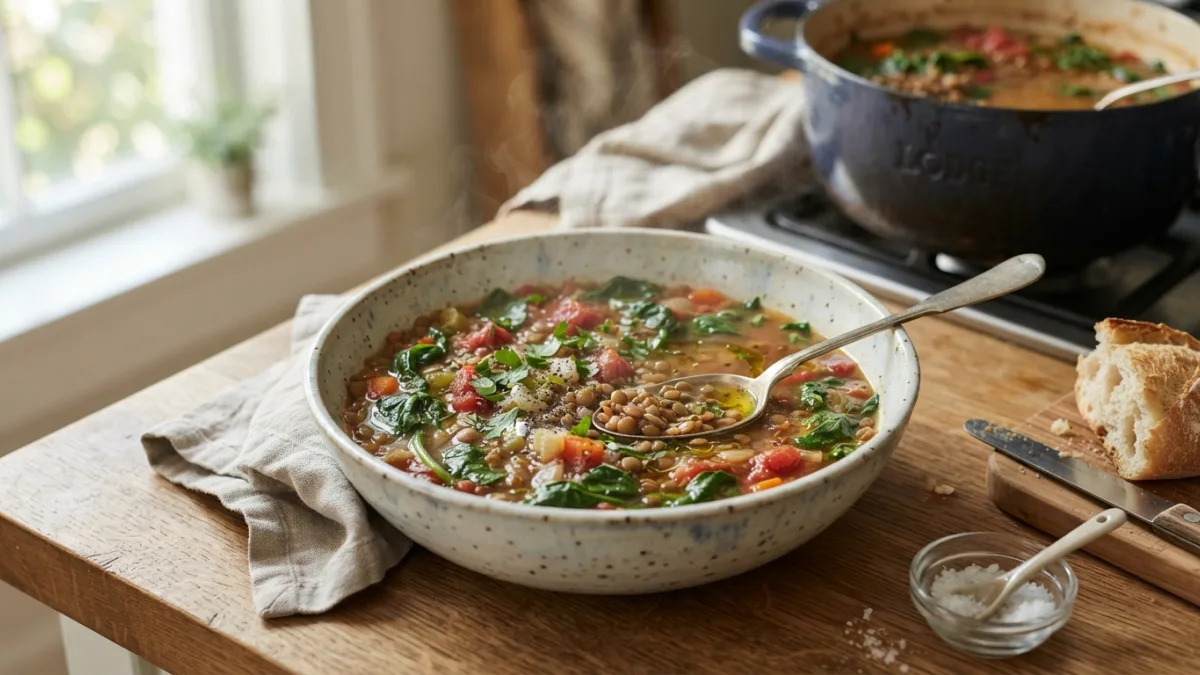
It is 6:30 p.m., the fridge looks sad, and you still want a real dinner. This is where one pot lentil soup earns its place on the table. You soften a few vegetables, add dried lentils and a can of tomatoes, and let the pot do the work. About 45 minutes later, you have a thick, cozy meal that costs very little and leaves only one pan to wash. Lentils need no soaking, they keep well for days, and they soak up flavor like a sponge. This guide gives you a simple base recipe, seven practical tips, and answers to the questions cooks ask most. You don’t need special skills. A little patience and a good spoon are enough.
The Base Recipe: A Simple Tomato Lentil Soup Recipe
This tomato lentil soup recipe serves four to six people and takes roughly 45 minutes from the first chop to the first bowl. The method is easy to remember: cook the vegetables, toast the spices, add the lentils and broth, then finish with tomatoes and greens. Every step happens in the same large pot, so the flavors build on each other instead of sitting side by side. Use the lists below as your map, then play with the tips that follow. Once you have made it a couple of times, you will probably stop measuring. Until then, stick to the amounts, taste often, and trust your nose. It will tell you when the spices are ready. If you want to dig deeper, our guide on One-Pot Pasta: 5 Recipes With Almost No Cleanup covers this in more detail.
What You Need
- 2 tablespoons olive oil
- 1 large onion, diced
- 2 carrots and 2 celery stalks, diced
- 3 garlic cloves, minced
- 1 tablespoon tomato paste
- 1 teaspoon ground cumin and 1 teaspoon smoked paprika
- 1½ cups (about 300 g) dried lentils, rinsed
- 6 cups (about 1.4 L) vegetable broth
- 1 can (400 g) diced tomatoes
- 5 oz (about 150 g) fresh baby spinach
- 1 lemon, salt, and black pepper
How to Make It
- Heat the oil in a large pot. Cook the onion, carrots, and celery for about 8 minutes, until soft.
- Stir in the garlic, tomato paste, cumin, and paprika. Cook for one minute.
- Add the lentils and broth. Bring to a boil, then lower the heat and simmer for 10 minutes.
- Add the canned tomatoes. Keep simmering until the lentils are tender.
- Stir in the spinach until it wilts. Finish with lemon juice, salt, and pepper.
7 Easy Tips for One Pot Lentil Soup With Big Flavor
Tip 1: Pick the Right Lentils
The green vs red lentils question shapes your whole soup. Green or brown lentils hold their shape, so you get a hearty bite and a rustic bowl. Red lentils, often sold split, collapse into a soft, creamy texture and cook faster. Neither choice is wrong. If you like chewy, go green. If you want silky and quick, go red. You can also mix half and half and get a little of both worlds. Rinse any type in a sieve and pick out small stones before cooking. Skip the soaking, because lentils don’t need it. For a broader look at the varieties, the lentil overview on Wikipedia is a handy reference. In a one pot lentil soup, texture matters, because nothing else shares the bowl.
Tip 2: Build Flavor With Lentil Soup Spices
Lentils taste mild on their own, so the seasoning does the heavy lifting. Cumin, smoked paprika, coriander, and turmeric make a reliable base, and a bay leaf adds quiet depth. A pinch of chili flakes brings gentle heat if you like it. The trick is to bloom the spices in hot oil for 30 to 60 seconds before adding any liquid. That short step wakes up their aroma and spreads it through the whole pot. Keep the heat moderate, because burnt spices turn bitter fast. Start with about one teaspoon of each, then taste at the end and adjust. If the soup feels flat, it often needs more salt or acid rather than more spice.
Tip 3: Learn the Timing
Many cooks ask how long cook lentils need before they turn tender, and the honest answer is: it depends on the type. Red lentils usually soften in about 15 to 20 minutes. Green and brown lentils often need 25 to 35 minutes. Older lentils can take longer, so don’t trust the clock alone. Fish out a few and bite into them. They should be soft but not mushy, unless you want a creamy soup. Keep the pot at a gentle simmer, because hard boiling can split the skins and make the texture uneven. Stir now and then so nothing sticks to the bottom. If the soup gets too thick, add a splash of water or broth. This connects closely with another common issue — see Sheet Pan Chicken Thighs: 5 Easy Steps With Garlic Herbs for more on that.
Tip 4: Add Tomatoes at the Right Moment
Tomatoes give the soup brightness and a little sweetness, but timing matters. Add the tomato paste early and cook it with the vegetables for a minute, since this deepens its flavor. Acidic ingredients can slow down the softening of lentils, so many cooks wait to add canned tomatoes until the lentils have simmered for a while. That is why the recipe above brings them in at the halfway point. If you use red lentils, which cook quickly, this matters less. Crush whole canned tomatoes with your hands for a more rustic look. Fresh tomatoes work too, though canned ones are more consistent in winter. A good one pot lentil soup should taste rich and balanced, not sharp.
Tip 5: Finish Lentil Soup With Spinach at the End
Spinach is the easiest way to add color, softness, and a little green flavor. Stir it in during the last one or two minutes of cooking. It wilts almost instantly, and the leaves keep their bright color instead of turning dull and gray. A big handful looks like too much at first, but it shrinks to a few spoonfuls. Baby spinach needs no chopping. If you use frozen spinach, thaw it and squeeze out the extra water first, so it doesn’t thin the broth. Kale or chard also work, though they need five to ten minutes to soften. Take the pot off the heat once the leaves collapse, and serve right away while everything still looks fresh.
Tip 6: Thicken Lentil Soup Your Way
You can thicken lentil soup without flour or cream, and the easiest method is also the cheapest. Scoop out one or two cups of soup, blend it smoothly, and stir it back into the pot. An immersion blender works even faster: just pulse it a few times and leave some lentils whole. No blender? Press the lentils against the side of the pot with a wooden spoon. You can also simmer the soup uncovered for 10 minutes so extra water evaporates. Adding a handful of red lentils or a diced potato helps too, since both break down and add body. Go slowly, because the soup keeps thickening as it cools. It is easy to add liquid later but hard to take it out. You might also find our article on Chicken and Rice: 5 Easy One-Pot Recipes to Make Tonight helpful here.
Tip 7: Finish With Lemon, Salt, and Fresh Herbs
The last minute decides whether the soup tastes good or great. Squeeze in fresh lemon juice, or use a splash of vinegar, and watch the flavors snap into focus. Then taste and add salt in small steps. Store-bought broth can already be salty, so go carefully. A drizzle of olive oil, a pinch of black pepper, and a handful of chopped parsley or cilantro make the bowl feel finished. Some people add a spoonful of yogurt or a little chili oil on top. These small touches take seconds and cost almost nothing. They also make one pot lentil soup feel like a proper meal rather than a quick fix from the pantry.
Make It a Healthy Vegan Lentil Soup
This healthy vegan lentil soup needs no swaps at all, as long as you use vegetable broth and olive oil. Lentils are a plant-based source of protein and fiber, which helps explain why the soup feels filling. Check broth labels if you cook for strict vegans or anyone with allergies, because ingredients vary by brand. To round out the meal, serve the bowl with whole-grain bread or a scoop of brown rice. Top it with pumpkin seeds for crunch, or add a spoonful of plant-based yogurt for creaminess. For broader, trustworthy guidance on building balanced plates, Harvard’s Nutrition Source is a good place to start. Keep the salt in check and let the vegetables, spices, and lemon carry the flavor.
How to Freeze Lentil Soup Without Losing Texture
You can freeze lentil soup with very good results, which makes a big batch a smart move. Let the pot cool first, and get leftovers into containers within two hours. Portion the soup into freezer-safe containers or bags, leave a little room at the top for expansion, and label each with the date. It keeps well in the freezer for a few months. For the best texture, freeze it before adding the spinach, then stir in fresh leaves when you reheat. Thaw the soup overnight in the fridge and warm it slowly on the stove, adding a splash of water if it has thickened. For safe handling of leftovers, see FoodSafety.gov. For a related walkthrough, check out One Pot Chicken Orzo: 5 Easy Tips for a Perfect Dinner.
Final Thoughts
A good pot of soup doesn’t need fancy tools or a long shopping list. It needs decent lentils, a few spices, some patience, and a final squeeze of lemon. Once you master the base, you can change it every week: swap red lentils for green, add a diced sweet potato, or use kale instead of spinach. Even a simple one pot lentil soup can taste new each time you cook it. Make a double batch on Sunday, freeze half, and you have dinner covered for a busy night. Start with the recipe above, try one tip at a time, and note what you like. Your own best version is only a few pots away.
FAQ: One Pot Lentil Soup
Do I need to soak lentils before cooking?
No. Lentils are small and soften quickly in simmering liquid. Just rinse them well and check for small stones or debris before they go in the pot.
Why are my lentils still hard after 40 minutes?
Old lentils, a very low simmer, or too much acid early on can all slow cooking. Keep simmering, add a little more liquid if needed, and wait to add tomatoes or lemon until the lentils begin to soften.
How many people does this soup serve?
The base recipe serves four to six as a main course. It stretches further if you serve it with bread or rice.
How long does leftover soup keep in the fridge?
Most cooked leftovers stay good for three to four days in a sealed container in the fridge. Reheat the soup until it is steaming hot, and check the guidance on FoodSafety.gov if you are unsure.
Can I use a different vegetable or green?
Yes. Sweet potato, zucchini, kale, and chard all work well. Add hard vegetables early with the onion, and add leafy greens near the end so they stay tender and bright.

Ghani Mejber — Founder & Lead Editor
Ghani Mejber is a home cook and the creator of The Quick Pantry. He specializes in simple, budget-friendly weeknight meals, one-pot dinners, and reliable meal-prep strategies designed for busy people who want delicious, comforting food without spending hours in the kitchen.