Sheet Pan Shrimp: 5 Easy Steps for a Quick Weeknight Dinner
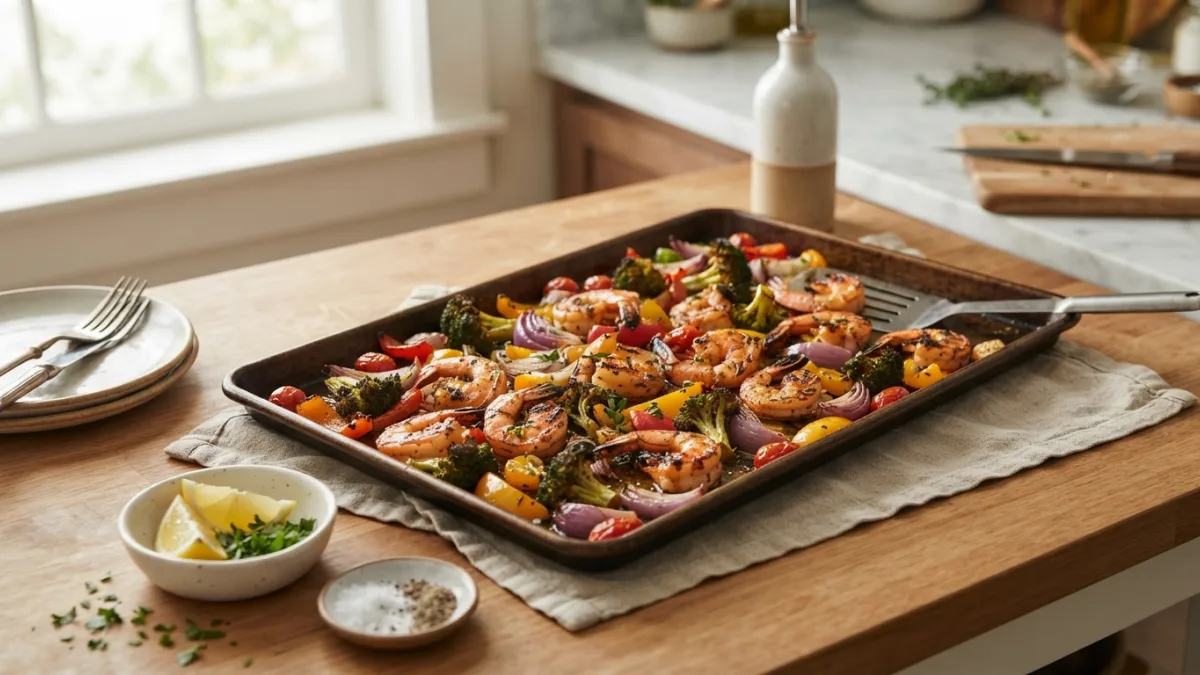
It’s 6 p.m., everyone is hungry, and the thought of washing three pots makes takeout look tempting. Here’s a better plan: sheet pan shrimp. You toss shrimp and vegetables with a few pantry staples, spread everything on one tray, and let a hot oven do the work. The shrimp turn pink and juicy, the vegetables pick up browned edges, and dinner is ready in about 20 minutes once the oven is hot. This guide covers five simple steps, plus tips on vegetables, seasoning, timing, storage, and cleanup. Even if you’ve never cooked shrimp before, you can pull this off tonight.
Why Roasted Shrimp and Vegetables Work So Well
Roasted shrimp and vegetables suit busy cooks because high heat does two jobs at once. Shrimp are small and cook fast. Many vegetables, cut to the right size, finish in about the same window. The dry heat of the oven browns the edges, which gives you deeper flavor than steaming or boiling can. You also skip the constant stirring a skillet demands. Slide the tray in, set a timer, and use those minutes to cook rice, whisk a quick sauce, or set the table. Shrimp are naturally lean and mild, too, so they take on whatever flavors you give them, from lemon and garlic to chili and smoked paprika. If you want to dig deeper, our guide on Sausage and Vegetables: 5 Easy Tips for a Sheet Pan Dinner covers this in more detail.
What You Need for Sheet Pan Shrimp
The ingredient list is short, and you probably own most of it already. For four servings, grab a large rimmed baking sheet, since a flat cookie sheet without edges lets juices and oil slide off. Buy shrimp that are already peeled and deveined to save time. Large shrimp hold up best in a hot oven because they stay tender while the vegetables brown. Smaller ones cook so quickly that they can turn rubbery before you blink. Here is the full shopping list for this version of sheet pan shrimp:
- 1 to 1½ pounds (450–680 g) large shrimp, peeled and deveined
- About 4 to 5 cups chopped vegetables (roughly 1 pound or 450 g)
- 3 tablespoons olive oil
- 3 garlic cloves, minced
- 1 lemon, for zest and juice
- 1 teaspoon paprika
- Salt and black pepper
- Optional: red pepper flakes and fresh parsley
Sheet Pan Shrimp in 5 Easy Steps
Follow these steps in order, and the timing works out nicely. The vegetables go in first, the shrimp join them later, and everything finishes together.
Step 1: Heat the Oven and Cut the Vegetables
Choosing the best vegetables for roasting is half the battle, because they need to soften and brown in about 10 to 12 minutes. Set your oven to 425°F (220°C) and cut your vegetables into bite-size pieces, roughly the same size so they cook evenly. Good quick-cooking choices include:
- Broccoli florets
- Bell pepper strips
- Zucchini half-moons
- Asparagus pieces
- Cherry tomatoes
- Red onion wedges
Dense vegetables such as potatoes and carrots take longer, so cut them very small or leave them out. Toss your vegetables with a little oil, salt, and pepper right on the pan. This connects closely with another common issue — see Sheet-Pan Salmon and Vegetables in 25 Minutes for more on that.
Step 2: Thaw Frozen Shrimp Fast
Frozen shrimp work well here, and you don’t need to plan a day ahead. Put them in a colander or a bowl, cover them with cold water, and stir every few minutes. Most shrimp soften in 10 to 15 minutes. Never use warm water or leave them on the counter, because bacteria grow quickly at room temperature. The government’s FoodSafety.gov site offers general guidance on handling seafood and other foods safely. Once the shrimp are thawed, drain them and pat them very dry with paper towels. This small step matters. Dry shrimp roast and brown, while wet shrimp steam and turn pale. Do this while the vegetables roast.
Step 3: Mix the Garlic Lemon Shrimp Seasoning
Now build a simple garlic lemon shrimp seasoning in a large bowl. Stir together the olive oil, minced garlic, lemon zest, paprika, a good pinch of salt, and plenty of black pepper. Add red pepper flakes if you like some heat. Save the lemon juice for the end, because acid can make shrimp texture mushy if they sit in it too long. Add the dry shrimp to the bowl and toss until every piece is coated. If you have a few extra minutes, let them sit in the bowl while the vegetables finish their head start. The garlic will perfume the oil, and the shrimp will taste far more interesting than plain salt could manage.
Step 4: Roast Until Just Pink
The shrimp cooking time oven setting depends on size, but most large shrimp need only 5 to 8 minutes at 425°F (220°C). Give the vegetables an 8 to 10 minute head start. Then pull the pan out, push the vegetables to the sides, and spread the shrimp in a single layer in the middle. Return the pan to the oven. The shrimp are done when they turn pink and opaque and curl into a loose “C” shape. A tight “O” means they’re overcooked. For food safety, the safe minimum internal temperature chart lists 145°F (63°C) for fish and shellfish. Watch closely during the final minutes of sheet pan shrimp roasting, since a minute too long makes a big difference.
Step 5: Finish With Lemon and Serve
Take the pan out and squeeze the lemon over everything while it’s still hot. The juice brightens the browned vegetables and wakes up the garlic. Sprinkle with chopped parsley, taste, and add a little more salt if needed. Serve the shrimp and vegetables straight from the pan for a relaxed, family-style dinner. They go well over rice, quinoa, or couscous, or you can pile them into warm pita bread. A spoonful of plain yogurt mixed with lemon juice makes a cool, tangy sauce on the side. If you want something extra, a handful of crumbled feta or a drizzle of good olive oil adds richness without any more cooking. You might also find our article on 10 Sheet-Pan Dinners for Busy Weeknights helpful here.
Healthy Weeknight Dinner Ideas Built on One Pan
Once you know the basic method, you can build endless healthy weeknight dinner ideas around it. For a Mediterranean twist, swap the paprika for oregano and add olives, cherry tomatoes, and feta at the end. For a Cajun style, use a spicy seasoning blend with bell peppers and onions. For something fresher, try soy sauce, grated ginger, and sesame oil with broccoli. Each version keeps the same timing and technique, so you never have to relearn the process. The Dietary Guidelines for Americans include vegetables and seafood among the foods in healthy eating patterns, and this dinner delivers both. Serve it with whole grains for a balanced plate. It’s a flexible template you can tweak with whatever vegetables are on sale.
Shrimp Meal Prep: How to Make It Work
Shrimp meal prep can work well if you handle the leftovers carefully. Let the pan cool for a few minutes, then pack the shrimp and vegetables into airtight containers and refrigerate them quickly. Plan to eat them within a few days. Shrimp turn rubbery when reheated too hard, so warm them gently in a skillet or microwave in short bursts, or skip reheating altogether. Cold shrimp are great in salads, grain bowls, and wraps. If you know a batch is headed for the fridge, pull the pan out a minute early, because reheating will finish the cooking. Keep sauces and fresh herbs in a separate small container so everything tastes bright on day two.
Make It an Easy Cleanup Dinner
An easy cleanup dinner is the quiet reward of this recipe. Line the pan with parchment paper or foil before you add the vegetables, and the baking sheet may need little more than a wipe. Without liner, soak the pan in hot, soapy water while you eat, and the browned bits will lift off easily. You’ll also have one mixing bowl, a cutting board, and a knife to wash, and that’s about it. Compared with a stovetop meal that uses a skillet, a pot, and a strainer, that’s a real time saver. Keep this sheet pan shrimp method in your back pocket for the nights when you’re tired but still want something fresh and homemade.
FAQ: Sheet Pan Shrimp
Can I cook shrimp straight from frozen?
You can, but thawing gives better results. Frozen shrimp release extra water in the oven, which can steam the vegetables and keep them from browning. A quick soak in cold water for 10 to 15 minutes solves the problem. For a related walkthrough, check out Creamy Tomato Gnocchi: 5 Easy Steps for One-Pan Dinner.
How do I know when the shrimp are done?
Look for firm, pink, opaque flesh and a loose “C” shape. If you want to be sure, check that the thickest part reaches 145°F (63°C) with a food thermometer.
What size shrimp should I buy?
Large or jumbo shrimp are the safest choice for oven roasting, since they stay juicy. On packages, a lower number per pound usually means bigger shrimp. Small shrimp can work, but they cook in just a few minutes.
Can I use shell-on shrimp?
Yes. The shells protect the meat and add flavor, but peeling at the table is messy. Peeled and deveined shrimp are simpler for a fast weeknight dinner.
What should I serve with sheet pan shrimp?
Rice, quinoa, couscous, or crusty bread all work well. A green salad or a simple yogurt-lemon sauce adds freshness and makes the meal feel complete.

Ghani Mejber — Founder & Lead Editor
Ghani Mejber is a home cook and the creator of The Quick Pantry. He specializes in simple, budget-friendly weeknight meals, one-pot dinners, and reliable meal-prep strategies designed for busy people who want delicious, comforting food without spending hours in the kitchen.