Quick Beef Stir-Fry: 5 Easy Steps to a Perfect Meal
Nothing tests your kitchen skills on a busy Tuesday quite like an empty fridge and a growling stomach. A quick beef stir-fry solves that problem in under 20 minutes, using little more than what’s already sitting in your pantry and freezer. This dish doesn’t demand a trip to the grocery store or a fancy shopping list. It just needs a hot pan, a bit of beef, and whatever vegetables have been hiding in your cupboard or crisper drawer. By the end of this guide, you’ll have a five-step method that turns odds and ends into a satisfying, restaurant-quality meal.
Why a Quick Beef Stir-Fry Fits Any Weeknight
Stir-frying was designed for speed. The technique originated in Chinese cooking, where high heat and constant motion cook food fast while keeping vegetables crisp and meat tender. That’s exactly why it works so well for a weeknight dinner recipe when you’re short on time and energy. You don’t need fresh produce delivered that morning; canned water chestnuts, frozen peas, or a jar of roasted red peppers all work beautifully. This flexibility makes stir-fry one of the most forgiving dishes in home cooking. If you’re curious about the technique’s roots, stir-frying has a long culinary history that explains why it remains so popular for fast meals across cultures today. If you want to dig deeper, our guide on Quick Lunch Bowls: 7 Easy Make-Ahead Recipes for Busy Days covers this in more detail. This is a common part of dealing with quick beef stir-fry, and it is worth keeping in mind.
Step 1: Pick the Right Cut and Slice It Thin
Not every beef cut belongs in a stir-fry. Skip anything meant for slow braising, like chuck or brisket, and reach for flank steak, sirloin, or even flat iron. These cuts cook fast and stay tender when sliced correctly. The trick is cutting against the grain into thin strips, roughly a quarter-inch thick. Thinner slices cook in seconds and soak up marinade or sauce more effectively. If your beef is partially frozen, it’s actually easier to slice evenly, so don’t worry if it’s not fully thawed. A few minutes of prep here makes the biggest difference in texture, more than almost any other step in this easy stir-fry recipe. Many people run into this exact issue with quick beef stir-fry at some point.
Step 2: Raid Your Pantry for Vegetables
This is where the “pantry” part truly shines. Frozen mixed vegetables, canned baby corn, jarred artichoke hearts, or even shredded cabbage that’s about to wilt can all go into the pan. Onions, garlic, and ginger are pantry staples that add flavor without needing anything fresh beyond what usually keeps for weeks. Carrots, bell peppers, and celery hold up well too, whether fresh or frozen. The goal with any of these pantry vegetable recipes is variety in texture and color, so mix something crunchy with something soft. Don’t stress about following a strict list; stir-fry recipes are meant to bend around what you already own. Keeping quick beef stir-fry in mind here will save you time later on.
Step 3: Mix a Simple Stir-Fry Sauce
A good sauce ties the whole dish together, and you probably already have the ingredients. Soy sauce, a splash of rice vinegar, a spoonful of sugar or honey, and a little cornstarch whisked with water make a glossy, savory coating that clings to both beef and vegetables. If you have sesame oil, oyster sauce, or chili flakes, toss those in too for extra depth. Mix everything in a small bowl before you start cooking, because once the pan is hot, there’s no time to measure ingredients. This step takes two minutes but makes the difference between bland leftovers and a dish that tastes intentional. This connects closely with another common issue — see Canned Beans 101: Quick Recipes and Storage Tips for more on that. This detail matters more than it seems once quick beef stir-fry comes up again.
Step 4: Get the Pan Screaming Hot
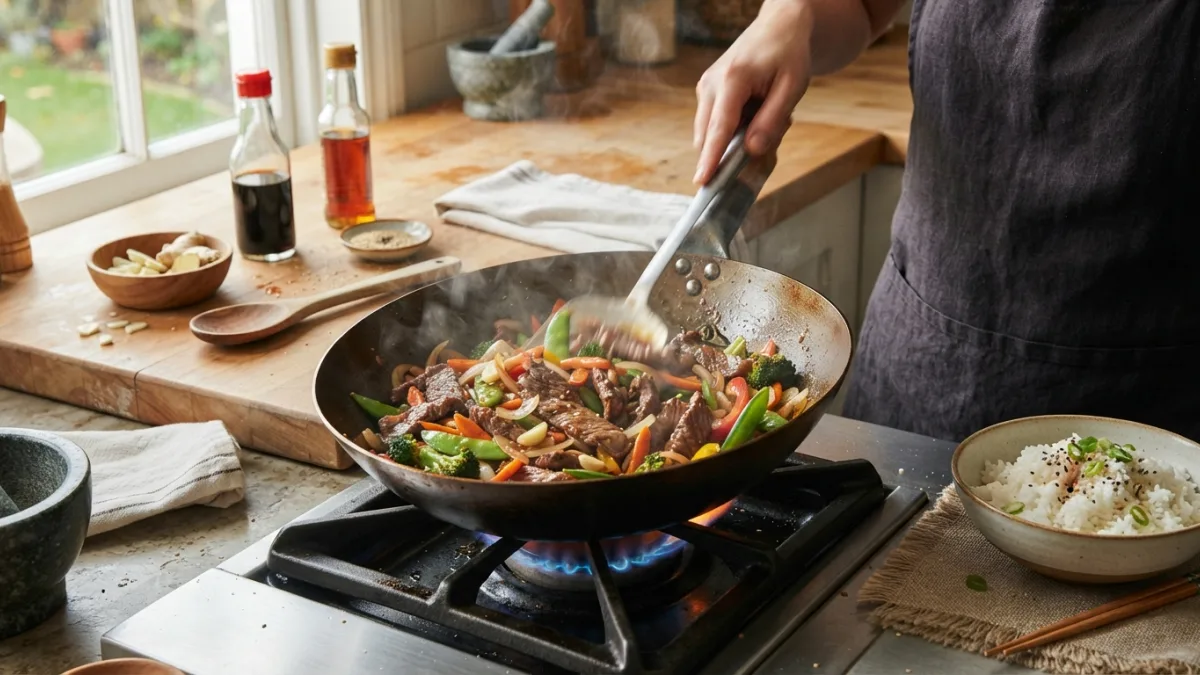
Stir-frying fails when the pan isn’t hot enough, leading to soggy, gray-looking beef instead of a good sear. Use a wok or a wide skillet, add a neutral oil like vegetable or canola, and wait until it shimmers before adding anything. Cook the beef in a single layer, in batches if needed, so it browns rather than steams. Let it sit undisturbed for about 30 seconds before stirring, which helps develop that slightly charred edge people love in a good beef and vegetable stir-fry. Remove the beef once it’s just cooked through, since it will finish cooking again later when combined with the vegetables and sauce. It is one of those small things that makes quick beef stir-fry easier to manage overall.
Step 5: Stir-Fry in Stages and Combine
With the beef set aside, add your vegetables to the same hot pan, starting with the ones that take longest to cook, like carrots or broccoli. Stir constantly, adding a splash of water if things start sticking. Once the vegetables are tender-crisp, return the beef to the pan and pour in your sauce. Toss everything together for another minute so the sauce thickens and coats each piece evenly. This staged approach keeps every ingredient at its best texture instead of turning into one overcooked mass, which is often the biggest mistake in a rushed quick beef stir-fry. This is a common part of dealing with quick beef stir-fry, and it is worth keeping in mind.
Tips to Make Your Stir-Fry Even Better
A few small habits separate an average stir-fry from a genuinely great one. Consider these ideas the next time you cook: You might also find our article on 20 Pantry Staples Every Quick-Cooking Kitchen Needs helpful here. Many people run into this exact issue with quick beef stir-fry at some point.
- Marinate the beef for 10–15 minutes in a splash of soy sauce and cornstarch for extra tenderness.
- Cut all vegetables to a similar size so they cook evenly.
- Don’t overcrowd the pan; cook in batches if your skillet is small.
- Taste the sauce before adding it, since soy sauce brands vary in saltiness.
- Finish with a drizzle of sesame oil or a sprinkle of sesame seeds for aroma.
None of these tips require special equipment, just a little attention to timing and seasoning. Keeping quick beef stir-fry in mind here will save you time later on.
What to Serve With Your Stir-Fry
Rice is the classic pairing, whether it’s freshly steamed jasmine rice or leftover rice from the fridge that gets a quick reheat. Noodles work just as well if that’s what you have on hand, turning the dish into a heartier one-pan meal. For a lighter option, spoon the stir-fry over cauliflower rice or alongside a simple green salad. If you’re feeding a crowd or want more quick dinner ideas built around this base recipe, double the sauce and vegetables while keeping the beef portion the same, which stretches the meal further without losing flavor. According to the Harvard T.H. Chan School of Public Health, filling half your plate with vegetables is a simple way to build a more balanced dinner, and stir-fry makes that easy without much extra effort. This detail matters more than it seems once quick beef stir-fry comes up again.
Storing and Reheating Leftovers
Leftover stir-fry keeps well in an airtight container in the refrigerator for up to three to four days. When reheating, use a hot skillet rather than a microwave if you want to preserve some texture in the vegetables, though a microwave works fine if you’re short on time. Always make sure beef is reheated to a safe internal temperature before eating, following food safety guidance from sources like the USDA’s beef safety guidelines. Avoid leaving cooked beef at room temperature for more than two hours, since bacteria multiply quickly in that range. Freezing is possible too, though vegetables may soften slightly once thawed. For a related walkthrough, check out One-Pot Pasta: 5 Recipes With Almost No Cleanup. It is one of those small things that makes quick beef stir-fry easier to manage overall.
A quick beef stir-fry proves that a satisfying dinner doesn’t need a long ingredient list or hours of prep. With a hot pan, a well-sliced piece of beef, and whatever vegetables are sitting in your kitchen, you can build a meal that feels far more thoughtful than the effort it actually took. Once you get comfortable with the basic steps, you’ll likely stop following a strict recipe altogether and start improvising based on what’s available that week. That’s really the point of this style of cooking: fast, adaptable, and dependable enough to become a regular part of your weekly dinner rotation. This is a common part of dealing with quick beef stir-fry, and it is worth keeping in mind.
Frequently Asked Questions
What is the best beef cut for a quick beef stir-fry?
Flank steak, sirloin, and flat iron steak all work well because they’re tender when sliced thin and cooked quickly over high heat. Avoid cuts meant for slow cooking, like chuck or brisket, since they turn tough in a fast-cooking method like this. Many people run into this exact issue with quick beef stir-fry at some point.
Can I use frozen vegetables instead of fresh ones?
Yes, frozen vegetables work fine and are often more convenient for pantry-based cooking. Just add them to the pan without fully thawing first, and cook slightly longer to remove excess moisture before adding the sauce. Keeping quick beef stir-fry in mind here will save you time later on.
How do I keep the beef from turning tough or chewy?
Slice the beef thin against the grain, cook it quickly over high heat, and avoid overcrowding the pan. Removing the beef once it’s just cooked through, then adding it back later, also helps prevent overcooking. This detail matters more than it seems once quick beef stir-fry comes up again.
What can I substitute if I don’t have soy sauce?
Tamari or a low-sodium alternative works well if you’re avoiding gluten. In a pinch, a mix of Worcestershire sauce and a little water can approximate the savory depth soy sauce normally provides. It is one of those small things that makes quick beef stir-fry easier to manage overall.
Is this recipe suitable for meal prepping?
Yes, this dish stores well in the refrigerator for several days, making it a practical option for meal prepping. Store the rice or noodles separately from the stir-fry if you want to keep textures at their best when reheating.