How Long Meal Prep Lasts: 7 Safe Fridge & Freezer Tips
It’s Thursday, and the chicken and rice you cooked on Sunday is staring at you from the fridge. Do you eat it? Knowing how long meal prep lasts helps you answer that question fast, and it can spare you a miserable night with food poisoning.
The good news is that the rules are simple. According to the U.S. government’s cold food storage charts, most cooked leftovers stay safe in the fridge for about three to four days. The freezer buys you much more time. This guide walks you through seven practical tips for storing your weekly meals, from cooling and containers to thawing and reheating. You’ll also learn how to spot food that has gone bad, so you can stop guessing and start eating with confidence. If you want to dig deeper, our guide on Chicken Meal Prep: 5 Easy Dinners From a Single Batch covers this in more detail.
How Long Meal Prep Lasts: The Quick Answer
If you only remember one thing, remember the three-to-four-day rule. Cooked meals like grain bowls, roasted vegetables, pasta, soups, and meat dishes are usually at their best, and still safe, for that long when you keep them cold. Count from the day you cooked them, not the day you opened the container. Time matters, but so does temperature, and a fridge that runs warm shortens every deadline on this list. Here is a simple cheat sheet to keep handy:
- Fridge (40°F / 4°C or colder): most cooked meals last 3 to 4 days.
- Freezer (0°F / -18°C): food stays safe for a long time, but quality drops after a few months.
- Counter: no more than 2 hours, or 1 hour on a hot day.
7 Safe Fridge and Freezer Tips for Meal Prep
These seven habits cover the whole journey, from the stove to your lunch break. Follow them in order and your weekly cooking will stay fresh, tasty, and safe.
Tip 1: Cool Food Fast for Better Meal Prep Food Safety
Good meal prep food safety starts before anything goes into the fridge. Bacteria multiply quickly in the “danger zone” between 40°F and 140°F (4°C to 60°C), so hot food should not sit out for long. Aim to get cooked meals into the fridge within two hours. Don’t put a giant steaming pot straight in, because it warms everything around it and cools slowly in the middle. Instead, split food into shallow containers so the heat escapes quickly. Leave the lid slightly open for a few minutes, then seal it once the steam stops. The CDC offers a helpful overview of food safety basics if you want to learn more about why temperature matters so much.
Tip 2: Set Up Your Meal Prep Fridge Storage the Smart Way
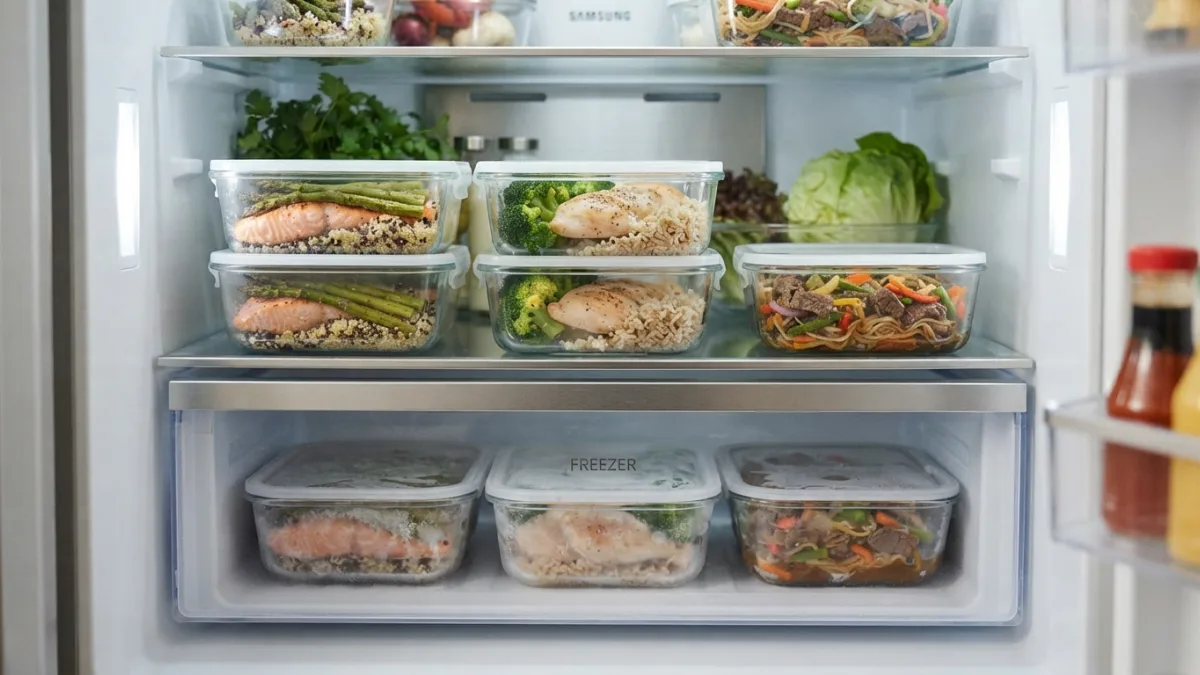
Smart meal prep fridge storage means more than finding free shelf space. First, check your fridge temperature with a cheap appliance thermometer, because the dial setting is often wrong. Keep it at 40°F (4°C) or below. Store your containers on the main shelves, not in the door, where the temperature swings every time you grab a drink. Place raw meat on the bottom shelf, away from your ready-to-eat meals, so juices can’t drip onto them. Finally, put a piece of tape on each lid and write the cooking date. That label is the easiest way to know how long meal prep has been sitting there, and it ends the Thursday guessing game. This connects closely with another common issue — see Freezer Meal Prep: 8 Easy Dinners to Assemble in 15 Minutes for more on that.
Tip 3: Choose the Best Meal Prep Containers
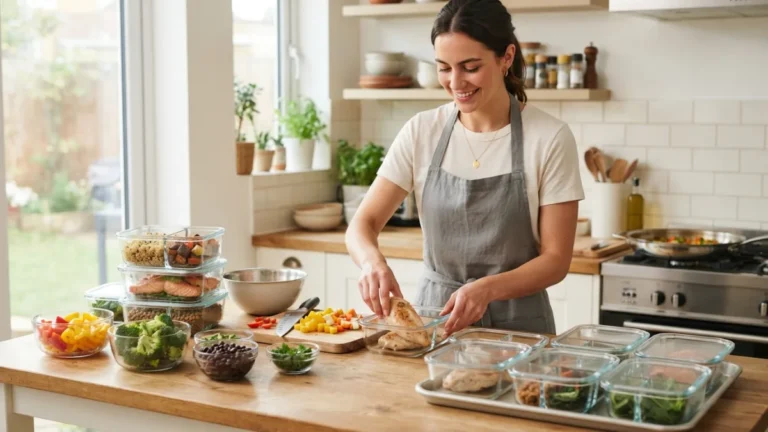
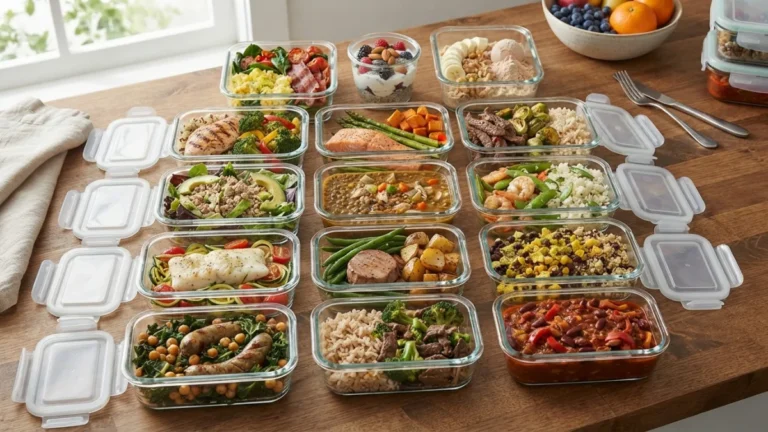
The best meal prep containers have tight, leak-proof lids and a shape that fits your fridge. Glass containers resist stains and smells, and many are oven-safe, but they are heavier and can break. Plastic is lighter and cheaper, yet it can stain with tomato sauce and warp over time. Whatever you pick, check the label: look for “microwave-safe” and “freezer-safe” before you use a container for those jobs. Shallow containers cool faster than deep ones. For freezing, leave a little space at the top, because liquids expand as they freeze. Single-portion containers also help, since you only open (and reheat) what you plan to eat. That keeps the rest of your food safely sealed and cold.
Tip 4: Know Your Cooked Chicken Shelf Life
Chicken is the star of many weekly menus, so the cooked chicken shelf life matters. Like other cooked poultry, it keeps for about three to four days in the fridge. That means a batch cooked on Sunday should be eaten by Wednesday, or Thursday at the very latest. Plan around it. Eat your chicken-heavy meals early in the week and save fish-free, vegetarian, or bean-based dishes for later. If you won’t reach the last portions in time, move them to the freezer on day two or three, not on day four. Freezing does not make old food fresh again. It only pauses the clock from the moment you freeze it.
Tip 5: Use Freezing Meal Prep for Days Five to Seven
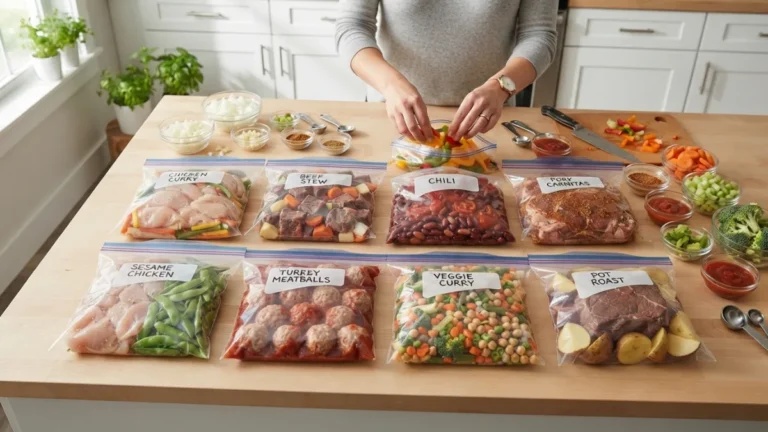
Freezing meal prep is the best answer when your plan stretches beyond four days. Freeze portions while they are still fresh, ideally the same day you cook or the day after. Soups, stews, chili, curries, casseroles, cooked grains, burritos, and meatballs all freeze well. Fresh salads, crisp raw vegetables, and cream-based sauces usually don’t, because they turn watery or separate. Cool food completely before it goes in, press out extra air, and lay bags flat so they freeze quickly and stack neatly. Add a label with the dish name and date. The freezer keeps food safe at 0°F (-18°C), but flavor and texture fade over time, so try to use frozen meals within a few months.
Tip 6: Handle Thawing Frozen Meals the Safe Way
Thawing frozen meals on the kitchen counter is a common mistake, because the outside warms up while the center stays frozen. The safest method is simple: move the container to the fridge the night before. For a faster option, seal the food in a leak-proof bag and submerge it in cold water, changing the water every 30 minutes or so. You can also use the microwave’s defrost setting, but cook and eat the food right away, since some parts may start to warm. Food thawed in the fridge can be reheated and eaten within a day or two. Once you’ve thawed a portion, don’t leave it sitting around, and treat it like fresh leftovers. You might also find our article on Budget Meal Prep: 5 Easy Meals From One Grocery List helpful here.
Tip 7: Focus on Reheating Meal Prep Safely
Reheating meal prep safely means heating food all the way through. The standard target is 165°F (74°C), according to USDA food safety guidance. A small digital food thermometer takes the guesswork out, especially for dense dishes like casseroles. Stir halfway through the microwave time, because microwaves heat unevenly and leave cold spots. Cover the dish to trap steam, and let it stand for a minute before eating. Reheat only the portion you plan to eat, not the whole batch, since repeated heating and cooling gives bacteria more chances to grow. If a meal still feels lukewarm in the middle, keep heating it until it steams all the way through.
Signs of Spoiled Food: When to Toss Your Meal Prep
Learning the signs of spoiled food helps, but your senses are not a perfect safety test. Throw out food that smells sour or strange, feels slimy, shows fuzzy mold, or has changed color. Liquid that looks cloudy in a soup or sauce is another red flag. Still, some harmful bacteria cause no obvious changes at all, so the calendar matters as much as your nose. If a dish is past the four-day mark, don’t taste it to find out. The same goes for food that was left out too long. This is where your date labels earn their keep, because how long meal prep has been stored is often the clearest clue you have. When in doubt, throw it out.
Final Thoughts on How Long Meal Prep Lasts
The rhythm is easy to learn. Cool your food quickly, keep your fridge cold, label every container, and eat the most perishable meals first. Freeze anything you won’t finish by day four, then thaw and reheat it carefully. Once these steps become habits, you’ll waste less food and worry less about what’s in the back of the fridge. Knowing how long meal prep lasts turns a stressful guess into a quick, confident decision, and that makes your Sunday cooking worth every minute.
FAQ: Meal Prep Storage Questions
How long does meal prep last in the fridge?
Most cooked meals stay safe for three to four days in a fridge set to 40°F (4°C) or colder. Count from the day you cooked the food, and freeze anything you won’t eat by then. For a related walkthrough, check out A Beginner's Guide to Sunday Meal Prep.
Can I freeze meal prep for a whole month?
Yes. Food kept at 0°F (-18°C) stays safe for a long time, but taste and texture slowly decline. Most meals taste best if you eat them within a few months.
Is it safe to refreeze thawed meals?
Food thawed in the fridge can generally be refrozen, though quality may suffer. Food thawed in the microwave or in cold water should be cooked and eaten right away instead.
Do glass containers keep meal prep fresh longer?
Not really. Freshness depends on temperature, cleanliness, and a tight lid, not the material. Glass resists stains and odors, but a well-sealed, freezer-safe plastic container works fine too.
What temperature should I reheat meal prep to?
Heat leftovers to 165°F (74°C) all the way through. Use a food thermometer to check the thickest part, and stir food partway through heating so it warms evenly.

Ghani Mejber — Founder & Lead Editor
Ghani Mejber is a home cook and the creator of The Quick Pantry. He specializes in simple, budget-friendly weeknight meals, one-pot dinners, and reliable meal-prep strategies designed for busy people who want delicious, comforting food without spending hours in the kitchen.