Make Ahead Breakfast Sandwiches: 7 Easy Freezer Tips
Picture a Tuesday morning. The alarm went off late, the coffee isn’t ready, and the drive-through line is wrapped around the block. Now picture a warm, cheesy sandwich waiting in your freezer, ready in about two minutes. That’s the promise of make ahead breakfast sandwiches, and it takes one relaxed weekend hour to pull off. You cook in bulk, wrap each sandwich, and let the freezer handle the rest. This guide covers the bread, the eggs, the wrapping, the storage clock, and the reheating, so every sandwich tastes like you just made it.
Why Freezer Breakfasts Beat the Morning Rush
Meal prep breakfast ideas work best when they ask almost nothing of you on a weekday, and a frozen sandwich asks for very little. You cook once, assemble a dozen, and the freezer covers you for weeks. The savings can add up too. A homemade sandwich often costs less than a café version, though your local grocery prices decide by how much. You also control what goes inside: the saltiness, the kind of cheese, the type of bread. Best of all, you stop making the same hungry decision at 7 a.m. Pick one hour on a quiet day, put on a podcast, and let the batch cooking begin. Your future self will thank you. If you want to dig deeper, our guide on High Protein Breakfasts: 10 Easy Meal Prep Ideas to Try covers this in more detail.
Seven Easy Tips for Make Ahead Breakfast Sandwiches
Tip 1: Start With Bread That Holds Up
An english muffin egg sandwich is the classic freezer choice, and for good reason. The English muffin has a firm, chewy crumb with little nooks that trap melted cheese, so it survives freezing and reheating without falling apart. Split the muffins and toast them lightly before you assemble. That thin, dry crust keeps moisture from the egg from turning the bread soggy. Bagel thins, small sandwich rolls, and sturdy whole-grain buns also work well. Soft sliced sandwich bread tends to get gummy, so save it for toast. Whatever you pick, match the bread to the size of your egg. Every bite should have a good balance of filling and crumb.
Tip 2: Bake the Eggs in a Sheet Pan
A high protein breakfast sandwich keeps you full until lunch, and eggs do most of the heavy lifting. Skip the skillet and bake them instead. Whisk a dozen eggs with a pinch of salt and pepper, pour them into a greased baking pan, and bake in a moderate oven until the center is fully set. Cut the sheet into squares that fit your bread. You get a dozen uniform patties with almost no standing at the stove. To boost the protein further, add Canadian bacon, turkey sausage, or an extra slice of cheese. Avoid runny yolks here. Fully cooked eggs freeze and reheat much better than soft ones.
Tip 3: Cool Everything, Then Wrap Tightly
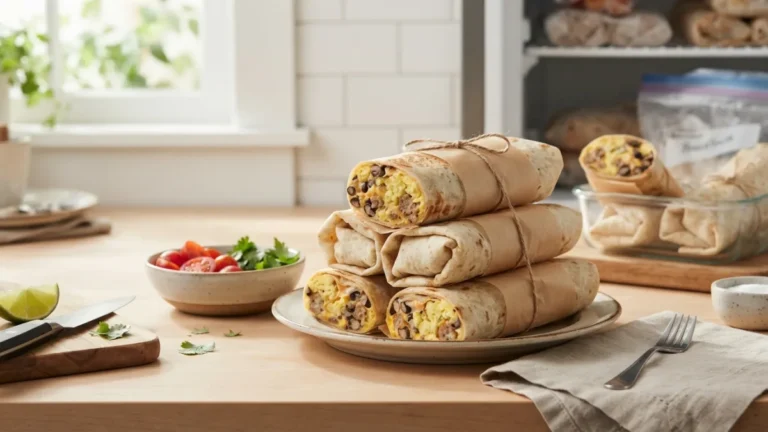
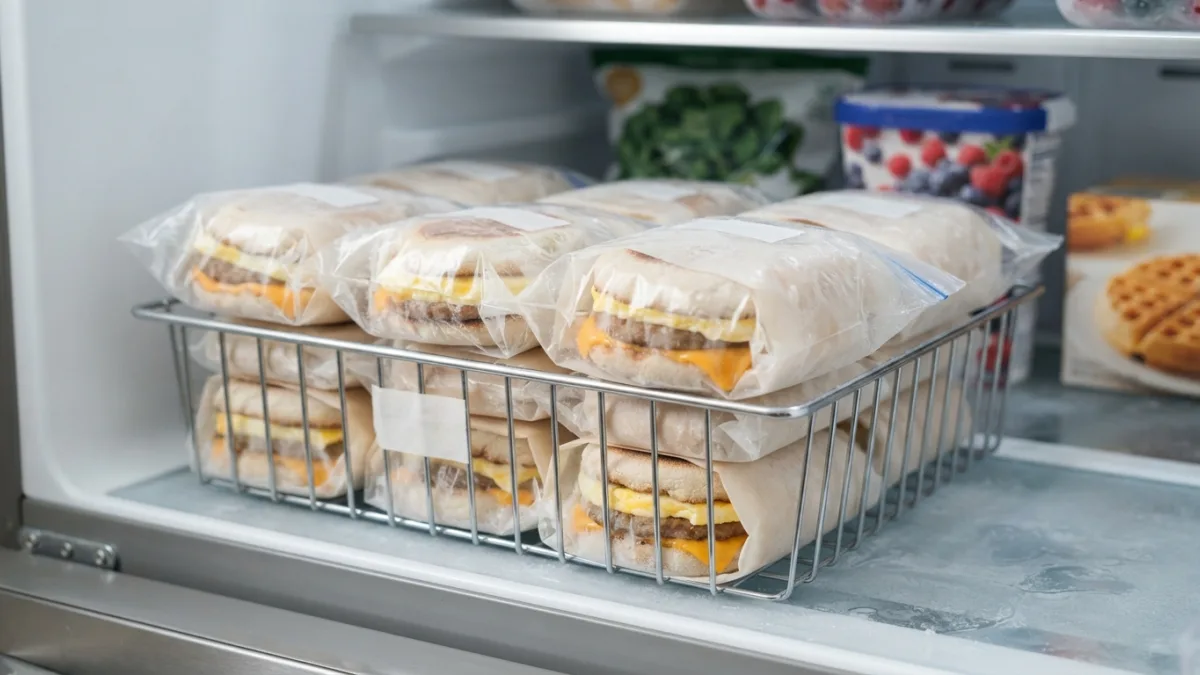
To wrap sandwiches for freezing, first let every component cool completely. Warm fillings release steam inside the wrapper, and that steam turns into ice crystals and soggy bread. Once everything is cool, build each sandwich and wrap it snugly in parchment paper, wax paper, or foil. Parchment is handy because you can microwave straight from it later. Then slide the wrapped sandwiches into a freezer bag and press out as much air as you can. If you have time, freeze them on a tray for an hour first. They won’t stick together, and you can grab exactly one at a time without wrestling a frozen block. This connects closely with another common issue — see Freezer Breakfast Burritos: 7 Easy Steps to Make Ahead for more on that.
Tip 4: Label Each Bag and Watch the Clock
Freezer sandwich shelf life comes down to the difference between safe and tasty. According to the USDA’s guidance on freezing and food safety, food kept constantly frozen stays safe, but its quality slowly declines. Bread dries out, cheese turns grainy, and eggs get rubbery. Many home cooks aim to eat their sandwiches within a month or two for the best flavor. Write the date and the filling on every bag with a permanent marker. Then use the oldest ones first. A strip of masking tape on the bag works well if you don’t trust marker on plastic.
Tip 5: Reheat From Frozen the Smart Way
You have two solid options to reheat frozen breakfast sandwiches: the microwave and the oven. For the microwave, remove any foil, wrap the sandwich in a paper towel, and heat it in short bursts. Flip it halfway through, and let it rest for a minute so the heat spreads out. For crisper bread, bake it in a moderate oven, still wrapped in foil, until hot all the way through. This takes longer, usually around twenty minutes or more. Thawing overnight in the fridge shortens either method. Whichever route you take, make sure the center is steaming hot. The USDA suggests reheating leftovers to 165°F (74°C).
Tip 6: Build a Meatless Batch Too
Vegetarian breakfast sandwich ideas freeze beautifully, as long as you manage the moisture. Try spinach and feta, roasted red pepper with cheddar, or black beans with pepper jack and a little salsa. Mushrooms and caramelized onions add a savory punch that makes up for the missing meat. Cook vegetables until they release their water, and squeeze cooked spinach dry in a clean towel. Wet fillings are the main cause of soggy bread. If your household mixes meat and meatless sandwiches, wrap them in different colored paper or mark the bags clearly. Nobody should bite into sausage by mistake. You might also find our article on No Cook Meal Prep: 7 Easy Days of Breakfast, Lunch & Dinner helpful here.
Tip 7: Handle Biscuits and Sausage Gently
A sausage egg biscuit sandwich is pure comfort food, but biscuits are more delicate than muffins. They crumble easily, so choose a sturdy recipe or biscuits that are fully cooled before you build. Cook the sausage patties until done, then blot them on paper towels to remove excess grease. Grease soaks into the biscuit and makes it heavy. Wrap each sandwich a little more carefully than the others, and store the biscuit sandwiches on top of the pile so nothing squashes them. The oven is usually the kinder way to reheat them, because it keeps the biscuit tender outside and warm inside instead of steamy and chewy.
A Simple Prep-Day Plan
The easiest way to start is to treat the whole job as an assembly line. Gather your bread, eggs, cheese, and meat or vegetables before you turn on the oven. Aim for twelve sandwiches your first time, which fits in one standard sheet pan of eggs and gives you two weeks of mornings if you eat them most days. Work in this order, and the whole process takes about an hour and leaves very few dishes to wash.
- Bake the egg sheet and cook the sausage or vegetables at the same time.
- Toast the bread lightly while the fillings cool.
- Assemble each sandwich with cheese against the egg.
- Wrap each one individually, then freeze them flat on a tray.
- Bag, label, and date them before you clean up.
Final Thoughts
Good make ahead breakfast sandwiches don’t need fancy skills, only a few smart habits. Choose sturdy bread, cook the eggs until firm, cool everything before wrapping, and write the date on the bag. Then reheat with a little patience, and you’ll have a hot breakfast on mornings that otherwise would have gone to a granola bar or a skipped meal. Start with one simple recipe and change it as you learn what your household likes. Next weekend, you might try a meatless version or a biscuit batch. A freezer full of good breakfasts is a small luxury, and you made it yourself. For a related walkthrough, check out Breakfast Ideas Without Eggs: 12 Quick and Easy Options.
Frequently Asked Questions
How long can I keep homemade breakfast sandwiches in the freezer?
Frozen food stays safe as long as it remains frozen, but quality drops over time. For the best taste and texture, most people eat their sandwiches within one to two months.
Do I need to thaw the sandwiches before heating them?
No. You can heat them straight from the freezer in the microwave or oven. Thawing overnight in the fridge just shortens the heating time.
How do I stop the bread from getting soggy?
Toast the bread lightly, cool all fillings fully, and blot greasy meat. Squeeze extra water out of cooked vegetables before you assemble.
Can I use foil or parchment paper to wrap them?
Yes, both work. Parchment or wax paper can go into the microwave, but you must remove foil first. Add a freezer bag around the wrapped sandwiches for extra protection.
Can I freeze sandwiches made with soft scrambled eggs or runny yolks?
It’s better not to. Fully set eggs hold their texture much better after freezing and reheating, while soft eggs often turn watery or rubbery.

Ghani Mejber — Founder & Lead Editor
Ghani Mejber is a home cook and the creator of The Quick Pantry. He specializes in simple, budget-friendly weeknight meals, one-pot dinners, and reliable meal-prep strategies designed for busy people who want delicious, comforting food without spending hours in the kitchen.