Meal Prep Salads: 12 Easy Recipes That Never Get Soggy
You open your lunch container on Wednesday and find a sad, watery pile that used to be a salad. Sound familiar? The good news is that meal prep salads don’t have to end this way. With a few smart habits and the right ingredients, you can pack five lunches on Sunday and still get a crunchy bite on Friday. This guide explains why salads go limp, how to build them so they last, and 12 easy recipes that hold up in the fridge. You don’t need fancy gear or advanced cooking skills. You need a little planning, a good container, and a dressing kept in the right place.
Why Meal Prep Salads Turn Soggy
Soggy salad comes down to one thing: moisture in the wrong place. Dressing breaks down delicate leaves. Wet vegetables like tomatoes and cucumbers release water as they sit. Warm ingredients wilt greens before the lid even closes. Time does the rest. Once leaves get damp, they lose their snap and start to taste flat. The fix is to keep wet and dry apart, and to keep tender and tough ingredients apart. Dry your greens well after washing. Let cooked foods cool completely before they touch anything leafy. Store the dressing at the bottom of the container or in a small cup on the side. Each step is tiny, but together they decide whether lunch is crisp or limp. If you want to dig deeper, our guide on High-Protein Meal Prep: 15 Easy Ideas for Every Meal covers this in more detail.
How to Keep Salad Crisp: The Layering Order
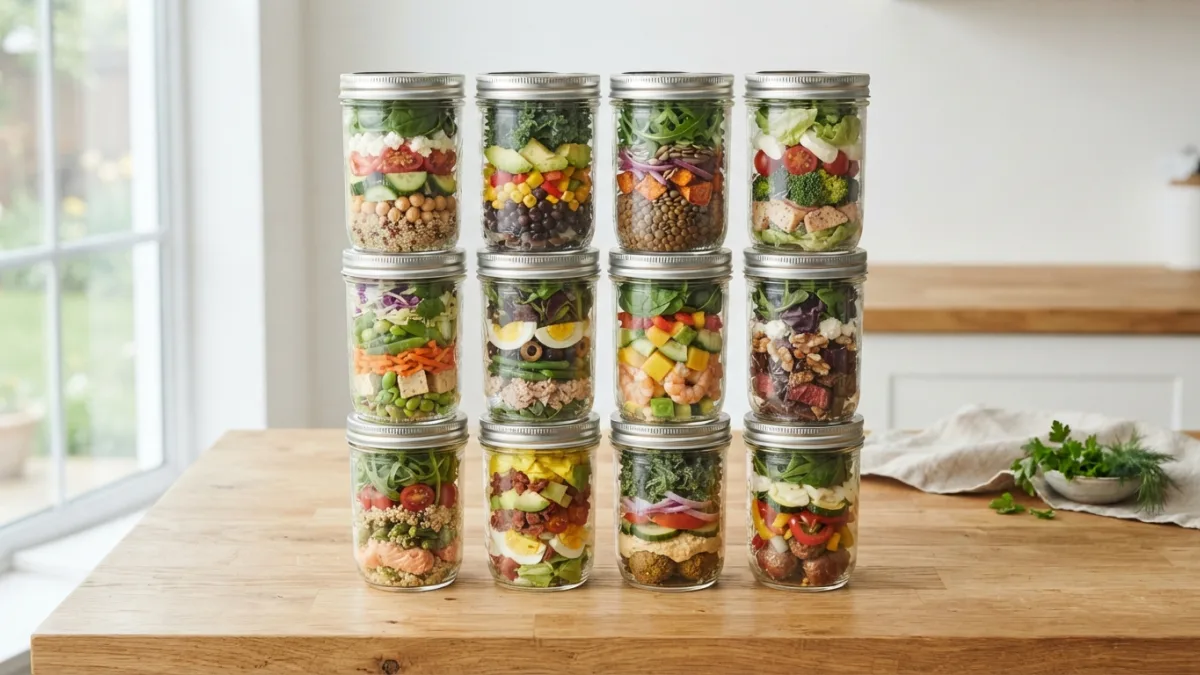
Layering is the simplest trick in the book, and it works in a jar, a bowl, or a box. Think of gravity as your helper. Heavy, wet, and sturdy ingredients go at the bottom, where the dressing can touch them without causing damage. Light, dry, and delicate ingredients go on top, far from the liquid. Use this order as your default:
- Dressing goes first, at the very bottom.
- Hard vegetables and beans come next, such as carrots, peppers, chickpeas, and onions.
- Grains, pasta, and proteins sit on top of those.
- Soft items like cheese, fruit, and herbs form the next layer.
- Greens go last, packed loosely at the top.
- Nuts, seeds, and croutons stay in a separate small bag or cup.
Pack the greens lightly. Crushed leaves bruise and release water, which works against everything you just did.
Choose Sturdy Salad Greens That Can Wait
Your choice of leaves matters more than any other decision. Sturdy salad greens, such as kale, romaine hearts, shredded cabbage, and shaved Brussels sprouts, can sit for days without collapsing. Tender leaves like baby spinach, arugula, and butter lettuce wilt fast, so add them on the day you eat. Kale even improves with time if you massage it with a little dressing, because the rub softens its tough texture. Variety helps too, since different colors bring different nutrients. The MyPlate website from the U.S. Department of Agriculture offers general guidance on building balanced meals with vegetables and protein. Start with a firm base, then add color and crunch around it.
Pick the Right Salad Storage Containers
Good salad storage containers make a bigger difference than most people expect. Look for a tight-fitting lid, a wide opening for easy packing, and enough room that the ingredients aren’t squashed. Glass doesn’t hold onto smells or stains, while plastic is lighter to carry. Containers with a separate compartment or a small cup for dressing are especially handy. A folded paper towel on top of the greens will soak up extra moisture, so swap it out if it gets damp. Don’t pack the container to the brim. Crowded leaves bruise, and bruised leaves turn slimy. Wash and dry every container fully before you fill it, because leftover water on the walls can start the sogginess before you even add food.
Homemade Salad Dressings That Won’t Ruin Your Lunch
Homemade salad dressings take about two minutes, and you control the salt, sugar, and oil. A common starting point is about three parts oil to one part acid, such as lemon juice or vinegar, plus salt, pepper, and a spoonful of mustard to hold everything together. Shake it in a small jar and keep it in the fridge. Three easy options cover most of your recipes:
- Lemon-olive oil: bright and light, great with grains and beans.
- Peanut-lime: creamy and bold, perfect for cabbage and noodles.
- Yogurt-herb: cool and tangy, ideal for broccoli and potatoes.
Dressings with yogurt or fresh herbs spoil sooner than simple oil-and-vinegar ones, so smell them before use and toss anything that seems off.
12 Meal Prep Salads That Hold Up All Week
These recipes lean on firm vegetables, hearty grains, beans, and sturdy leaves. Most of them taste better on day two or three, because the flavors have time to blend. Each one comes with a note on how to protect the texture. Mix and match the dressings above, and treat the ingredient lists as friendly suggestions rather than strict rules. These meal prep salads work whether you pack them in jars, boxes, or big bowls. This connects closely with another common issue — see Meal Prep Lunches: 12 Easy Recipes That Stay Fresh for more on that.
1. Mason Jar Greek Salad
Mason jar salads are the classic prep-ahead format, and this Greek version shows why. A mason jar keeps the dressing far from the leaves. Pour in olive oil, lemon juice, and oregano, then add cucumber, chickpeas, red onion, and olives. Top with feta and chopped romaine hearts. Seal the lid and chill. At lunchtime, shake the jar and tip it into a bowl.
2. Chicken Quinoa Power Bowl
Among high protein salads, this one is a dependable weekday winner. Combine cooked quinoa, sliced roasted chicken, shredded red cabbage, diced bell pepper, and chopped romaine. Pack lemon-tahini dressing on the side. Quinoa stays fluffy and doesn’t soak up liquid the way pasta does, so the bowl still tastes fresh on day four.
3. Kale Caesar With Roasted Chickpeas
Chop kale finely and massage it with Caesar dressing until the leaves soften. Unlike lettuce, kale holds its shape for days. Add shaved Parmesan and keep the roasted chickpeas in a small bag. They replace croutons and stay crunchy only if you add them just before eating.
4. Smoky Chickpea and Red Pepper Salad
This one has no leaves at all, so nothing can wilt. Toss chickpeas, roasted red peppers, parsley, and red onion with lemon juice, olive oil, and smoked paprika. The chickpeas soak up flavor as they rest. Scoop it onto fresh greens at lunchtime, or eat it with pita bread.
5. Asian Cabbage Crunch Salad
Shred green and red cabbage, then add grated carrots, edamame, and sliced scallions. Mix with a peanut-lime dressing and sprinkle sesame seeds on top. Cabbage has thick, tough cell walls, so it stays crunchy for several days, even when fully dressed. It is one of the most forgiving options on this list.
6. Black Bean and Corn Salad
Mix black beans, corn, diced bell pepper, red onion, and cilantro with lime juice and a pinch of cumin. It tastes zesty and fresh straight from the fridge. Slice avocado only when you’re ready to eat, since cut avocado browns quickly. Serve it with tortilla chips or spoon it over rice.
7. Broccoli Crunch Salad
Chop raw broccoli into small florets, then toss with grated carrot, red onion, dried cranberries, and sunflower seeds. A tangy yogurt dressing coats everything. Raw broccoli is firm enough to absorb the dressing without going limp, and the flavor mellows nicely overnight. You might also find our article on 10 Meal Prep Containers Worth Buying (and Why) helpful here.
8. Italian Pasta Salad
Cook short pasta until just tender, rinse it under cold water, and let it dry. Add olives, cherry tomatoes, roasted peppers, and mozzarella pearls, then toss with a red wine vinaigrette. Pasta drinks dressing as it sits, so keep a few spoonfuls aside and add them right before you eat.
9. Tuna and White Bean Salad
Flake canned tuna into a bowl with white beans, chopped celery, parsley, red onion, and lemon juice. Add olive oil, salt, and plenty of black pepper. Pack arugula separately and pile the tuna mixture on top at lunchtime. The beans keep the salad filling without extra bread.
10. Roasted Vegetable Farro Salad
Roast carrots, red onion, and zucchini until golden. Let them cool fully before mixing, or the steam will make everything damp. Combine with chewy cooked farro and baby kale, then add a balsamic vinaigrette. Farro keeps its bite for days, which makes this a hearty, filling lunch.
11. Shaved Brussels Sprout and Apple Salad
Slice Brussels sprouts as thinly as you can. Add diced apple tossed in lemon juice to prevent browning, plus chopped pecans and shaved Parmesan. A maple-mustard vinaigrette ties it together. The sprouts stay crisp, and the apple adds a sweet crunch in every forkful.
12. Lentil and Roasted Carrot Salad
Use green or brown lentils, which hold their shape better than red ones. Mix them with roasted carrots, crumbled feta, and chopped herbs, then dress with lemon juice, olive oil, and ground cumin. This salad is earthy, filling, and gets better with a night in the fridge.
Make Ahead Lunch Ideas: A Simple Sunday Plan
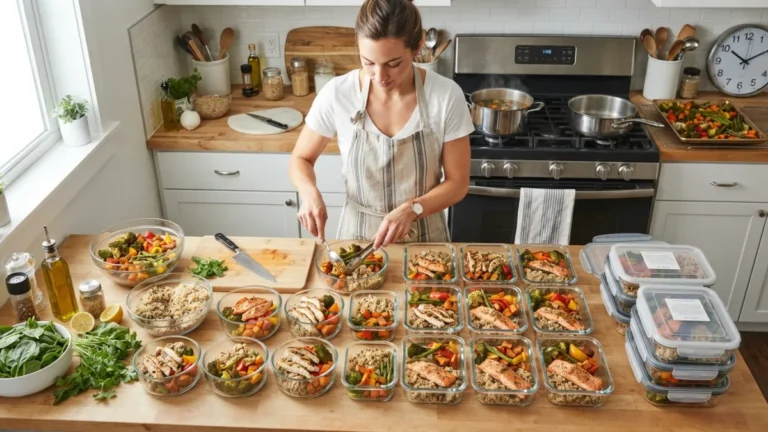
These make ahead lunch ideas work best when you prep in a loose routine rather than from scratch each time. Pick two salads from the list so you don’t get bored. Cook one grain and one protein, roast one tray of vegetables, and whisk one or two dressings. Wash and dry the greens, then chop the sturdy vegetables. Assemble the containers in an assembly line, which is faster than building each lunch one at a time. Label the lids with the date if you tend to forget. Keep delicate extras, like avocado, nuts, and soft herbs, in a small separate container. The whole session can take about an hour, and it saves you from rushed, pricey lunches.
How Long Salad Lasts in the Fridge
How long salad lasts depends on what’s inside it. Salads with cooked chicken, eggs, tuna, or cooked grains should follow standard leftover rules. Keep your fridge at 40°F (4°C) or colder, and check the cold food storage chart on FoodSafety.gov for timing guidance. Many cooked leftovers are best eaten within a few days, so plan your heaviest protein salads for the first half of the week. Sturdy vegetable and bean salads often stay pleasant a little longer, but quality drops with time. For a related walkthrough, check out Chicken Meal Prep: 5 Easy Dinners From a Single Batch.
Trust your eyes and nose. Slimy leaves, a sour smell, or a cloudy liquid at the bottom mean it’s time to throw the salad away. When in doubt, don’t eat it. If you want to stretch your prep across a full workweek, put the most delicate recipes at the front of the schedule and save kale, cabbage, and bean salads for Thursday and Friday.
Final Thoughts
Soggy lunches aren’t a law of nature. They happen when moisture, heat, and delicate leaves meet in a closed box. Keep the dressing apart or at the bottom, choose firm ingredients, and pack in a clean container with room to breathe. Then rotate through a few recipes so you never get tired of them. Meal prep salads can be colorful, filling, and genuinely fun to eat, even on day four. Start with one or two of the recipes above this weekend, see how they hold up, and adjust to your taste. A good salad on Friday is absolutely possible.
FAQ: Meal Prep Salads That Don’t Get Soggy
Can I add dressing to my salad before storing it?
Yes, but only with sturdy ingredients like kale, cabbage, beans, grains, and raw broccoli. For salads with tender leaves, keep the dressing at the bottom of a jar or in a separate cup and mix it right before eating.
What is the best lettuce for meal prep?
Romaine hearts, kale, and shredded cabbage are the safest choices. They have thick leaves that resist wilting. Spinach, arugula, and butter lettuce are better added on the day you plan to eat them.
How do I stop avocado from turning brown in a prepped salad?
The easiest way is to slice it fresh at lunchtime. If you must prep it early, coat the cut surface with lemon or lime juice and press the pieces tightly in a small covered container.
Does a paper towel really help?
It does. A dry paper towel on top of the greens absorbs extra moisture and slows wilting. Replace it if it feels wet, and make sure the greens are fully dry before packing.
Can I freeze meal prep salads?
Most salads freeze poorly. Raw vegetables and leafy greens turn mushy once thawed. Cooked grains, beans, and lentils can be frozen on their own, so freeze those parts separately and add fresh vegetables after thawing.

Ghani Mejber — Founder & Lead Editor
Ghani Mejber is a home cook and the creator of The Quick Pantry. He specializes in simple, budget-friendly weeknight meals, one-pot dinners, and reliable meal-prep strategies designed for busy people who want delicious, comforting food without spending hours in the kitchen.