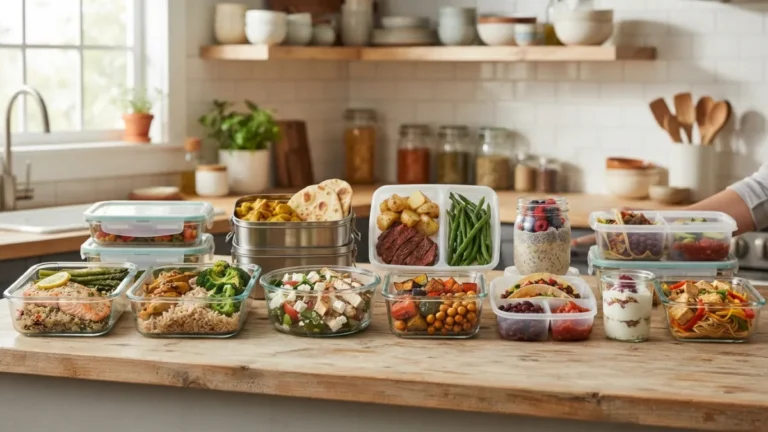
How to Meal Prep for a Week in Under 2 Hours
Sunday afternoons don’t have to disappear into a haze of chopping, stirring, and dishwashing. If you’ve ever stared at a sink full of pots wondering why “cooking for the week” ate your entire day, you’re not alone. The good news is that weekly meal prep doesn’t require hours of your weekend or a culinary degree. With the right plan, a few smart shortcuts, and a little organization, you can prep five to seven days of meals in under two hours flat. This guide walks you through exactly how to do it, step by step, without turning your kitchen into a war zone.
Why Weekly Meal Prep Saves You Time and Money
Think about how many times you’ve ordered takeout simply because you were too tired to cook after work. That habit adds up fast, both in dollars and in calories you didn’t plan for. Weekly meal prep flips that script by putting decisions in your hands ahead of time, so dinner becomes a matter of reheating rather than starting from scratch. It also cuts down on food waste, since you’re buying ingredients with a purpose instead of grabbing random items that end up rotting in the crisper drawer. Beyond the practical savings, there’s a mental benefit too. Knowing your meals are already handled removes one more decision from your day, which can make weeknights feel noticeably less chaotic. If you want to dig deeper, our guide on 15 Weeknight Dinners Ready in 30 Minutes or Less covers this in more detail. This is a common part of dealing with weekly meal prep, and it is worth keeping in mind.
Before You Start: Setting Up for Success
A little preparation before you even touch a knife makes the biggest difference in how fast this process goes. Clear off your counters, pull out your cutting boards, and set up your containers before you start cooking so you’re not hunting for lids while your rice boils over. If you’re new to this, keep your first week simple rather than trying to recreate a restaurant menu. Meal prep for beginners works best when you pick two or three proteins, a couple of grains, and a handful of vegetables that can mix and match throughout the week. Trying to cook ten different complicated dishes in one sitting is exactly how a two-hour session turns into a five-hour ordeal. Many people run into this exact issue with weekly meal prep at some point.
Choose Your Meal Prep Ideas
Start by thinking in categories rather than individual recipes. Pick one protein that roasts easily, like chicken thighs or a tray of tofu, one that works well in a skillet, like ground turkey or shrimp, and one grain or starch that can serve as a base, such as rice, quinoa, or roasted potatoes. From there, choose two or three vegetables that roast or steam in the same amount of time so they can share oven space. This approach gives you enough variety to avoid boredom by Thursday, while keeping your shopping list and cooking steps manageable. Good meal prep ideas aren’t about fancy plating; they’re about building blocks you can rearrange into different meals all week long. Keeping weekly meal prep in mind here will save you time later on.
Make a Smart Grocery List
Once you know your building blocks, write your grocery list by section of the store rather than by recipe. This small change prevents you from doubling back through the produce aisle three times because you forgot the peppers. Stick to ingredients that store well for four to five days, and buy pre-washed greens or pre-cut vegetables if your budget allows, since they shave real minutes off your prep time. Buying in slightly larger quantities than usual also sets you up for future batch cooking recipes, since extra portions freeze well for weeks when you’re not in the mood to cook at all. A tight, organized list is one of the simplest ways to keep your shopping trip under thirty minutes. This detail matters more than it seems once weekly meal prep comes up again.
The Under-2-Hour Weekly Meal Prep Plan
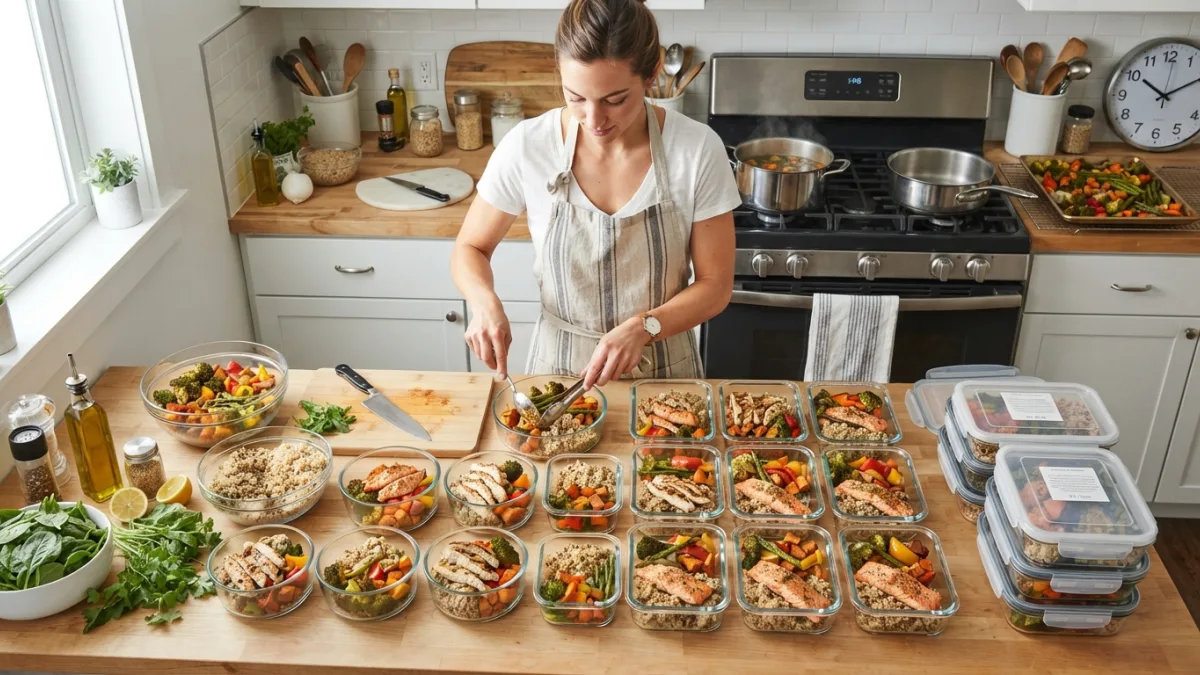
Here’s where the timer actually starts. The key to finishing in under two hours is working in parallel instead of one task at a time, the same way a restaurant kitchen operates. Preheat your oven the moment you walk into the kitchen, because idle oven time is wasted time. While it heats, start any rice or grains on the stovetop, since those can simmer unattended. From there, follow this general order to keep everything moving at once: It is one of those small things that makes weekly meal prep easier to manage overall.
- 0 to 10 minutes: Preheat oven, start grains or rice, wash and chop vegetables.
- 10 to 30 minutes: Season and place proteins and vegetables in the oven to roast.
- 30 to 50 minutes: Cook a stovetop protein or sauce while the oven does its work.
- 50 to 70 minutes: Check and rotate oven items, prep any raw components like salads or dressings.
- 70 to 90 minutes: Pull everything out, let it cool slightly, and start portioning into containers.
- 90 to 110 minutes: Finish packing containers, label them, and wipe down surfaces as you go.
Wiping counters and washing bowls while things cook, rather than after, is honestly the single biggest time-saver in this entire process. This is a common part of dealing with weekly meal prep, and it is worth keeping in mind.
Batch Cooking Recipes That Work Every Time
Not every recipe is built for batch cooking, so it helps to lean on dishes that actually improve after a day or two in the fridge. Soups, stews, chili, and curries tend to taste even better once the flavors have had time to settle, making them ideal candidates for a Sunday session. Grain bowls are another reliable option, since you can cook a large pot of rice or quinoa once and use it as the base for three or four completely different meals. Sheet-pan dinners deserve a mention too, because tossing a protein and vegetables on one tray means less cleanup and more hands-off cooking time. Once you find two or three batch cooking recipes that your household genuinely enjoys, you can rotate them on a loop and cut your weekly planning time down to almost nothing. Many people run into this exact issue with weekly meal prep at some point.
Healthy Meal Prep Tips to Keep Meals Interesting
The biggest reason people abandon meal prep isn’t the cooking itself, it’s boredom with eating the same flavors five days in a row. A few small habits fix this without adding extra work. Cook your base proteins and grains plain, then prepare two or three different sauces or spice blends to rotate throughout the week, like a lemon herb dressing, a spicy peanut sauce, or a simple garlic chili oil. Keep portions balanced by aiming for a palm-sized amount of protein, a fist-sized portion of vegetables, and a cupped-hand portion of grains or starch, which naturally keeps meals satisfying without much math. These healthy meal prep tips also apply to snacks: pre-portioning nuts, fruit, or yogurt into small containers means you’re less likely to reach for something less nutritious when hunger hits between meals. Keeping weekly meal prep in mind here will save you time later on.
Storage and Reheating: Getting the Basics Right
How you store your food matters almost as much as how you cook it. Cooked meals generally hold up well in the refrigerator for four to five days, while anything you don’t plan to eat within that window should go straight into the freezer. Glass containers tend to reheat more evenly and don’t hold onto stains or odors the way some plastics do, though they’re heavier and more expensive upfront. Here’s a quick comparison to help you decide what fits your kitchen and budget best: This detail matters more than it seems once weekly meal prep comes up again.
| Container Type | Best For | Microwave Safe | Downside |
|---|---|---|---|
| Glass | Reheating, long-term storage | Yes | Heavy, can break if dropped |
| BPA-free plastic | Budget-friendly everyday use | Usually | Can stain or absorb odors over time |
| Silicone | Freezer storage, flexible portions | Yes | Not ideal for very saucy dishes |
Whichever containers you choose, label them with the date before storing, since it’s easy to lose track of what’s fresh once everything is stacked in the fridge. It is one of those small things that makes weekly meal prep easier to manage overall.
Common Mistakes That Slow Down Meal Prep for Beginners
Even with a solid plan, a few habits can quietly stretch your two-hour session into something much longer. Overcomplicating the menu is the most common trap, especially for meal prep for beginners who try to recreate five different cuisines in one sitting. Another frequent issue is prepping ingredients that don’t hold up well, like fried foods that turn soggy or delicate herbs that wilt within a day. Skipping the cleanup-as-you-go habit is another time drain, since a sink full of dishes at the end makes the whole process feel far more exhausting than it needs to be. Finally, don’t underestimate the value of quick meal prep shortcuts like frozen pre-cut vegetables or canned beans; they’re not cheating, they’re simply smart choices that keep you consistent week after week. This is a common part of dealing with weekly meal prep, and it is worth keeping in mind.
Meal prepping doesn’t have to be a marathon, and it definitely doesn’t require giving up your entire Sunday. Once you build a rhythm around a few reliable recipes, a tight grocery list, and a cooking order that keeps your oven and stovetop working at the same time, two hours becomes more than enough. The real win isn’t just the time you save on any single day, it’s the mental space you get back all week long, knowing dinner is already handled. Start small, stick with meals you actually enjoy, and adjust your system as you learn what works for your schedule. Within a few weeks, this process will feel less like a chore and more like a habit you genuinely look forward to. Many people run into this exact issue with weekly meal prep at some point.
Frequently Asked Questions About Weekly Meal Prep
How many meals can I realistically prep in two hours?
Most people can prepare four to six meals’ worth of food in two hours once they get comfortable with the process, especially if they stick to two or three core recipes rather than a completely different dish for every day. Keeping weekly meal prep in mind here will save you time later on.
Is weekly meal prep actually cheaper than eating out?
In most cases, yes. Buying ingredients in bulk for several meals at once typically costs less per serving than ordering takeout or buying individual pre-made meals, even after accounting for containers and occasional food waste. This detail matters more than it seems once weekly meal prep comes up again.
What are the best meal prep ideas for someone who doesn’t like leftovers?
Try prepping components rather than finished dishes. Cook your proteins, grains, and vegetables separately, then assemble them fresh each day with a different sauce or seasoning so meals feel new even though the base ingredients repeat. It is one of those small things that makes weekly meal prep easier to manage overall.
Can I freeze meal prep instead of refrigerating it?
Yes, and it’s a great option for batch cooking recipes like soups, stews, and casseroles. Just make sure to cool food completely before freezing and use freezer-safe containers to avoid freezer burn. This is a common part of dealing with weekly meal prep, and it is worth keeping in mind.
What’s the easiest way to start meal prep for beginners?
Start with just two or three days instead of a full week. Pick one protein, one grain, and two vegetables, then build simple meals around them. Once that feels manageable, you can expand into a full weekly meal prep routine with more variety.