Canned Salmon Recipes: 12 Easy Budget-Friendly Meals
Your pantry may already hold the cheapest, fastest protein in the store. Canned salmon recipes can turn one humble tin into a dinner that tastes far fancier than it costs. This guide gives you 12 simple ideas, plus tips on buying, storing and stretching the fish so your grocery money goes further.
Why Canned Salmon Belongs in Your Pantry
The canned salmon nutrition benefits start with protein and healthy fats. Salmon is a well-known source of omega-3 fatty acids, which the NIH Office of Dietary Supplements explains in its consumer fact sheet. Many cans also include soft, edible bones, and those bones add calcium to your plate. You mash them right into the fish and nobody notices. If you want to dig deeper, our guide on Dinners With Canned Tomatoes: 10 Easy Pantry Recipes covers this in more detail.
Salmon also sits among the lower-mercury choices in the FDA’s advice about eating fish, so it suits many families. The fish is already cooked, which means no thawing, no scaling and no fuss. That convenience makes canned salmon recipes a realistic option on nights when you are tired and the takeout app is tempting. Check the label for added salt, and adjust your seasoning to match.
How to Pick the Best Canned Salmon Brands
The best canned salmon brands are not always the most expensive ones. Start by reading the label. Look for wild-caught salmon, a short ingredient list and a sodium level you are happy with. Some cans are packed in water, some in oil, and some come skinless and boneless. Skin and bones are perfectly safe to eat and add nutrients, but boneless cans feel smoother if your family is picky.
Species matters too. Pink salmon is mild, soft and usually the cheapest. Sockeye is deeper red, firmer and richer in flavor, and it costs more. For patties, casseroles and soups, pink salmon does the job well. Save sockeye for simple dishes where the fish stays front and center. Good canned salmon recipes start with a can you trust, so try two or three store and national labels and keep the one you like best.
12 Easy Canned Salmon Recipes for Busy Weeknights
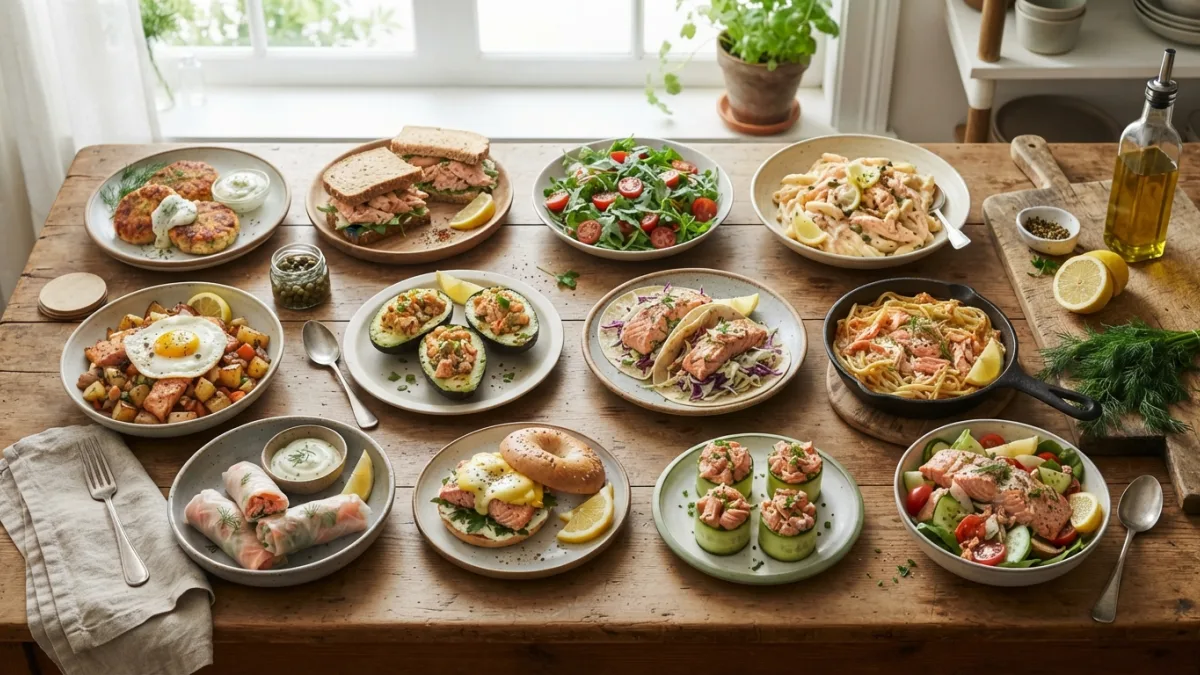
Each idea below uses one or two cans and everyday ingredients. Drain the fish first, flake it with a fork, and taste before adding salt. Most of these meals take 30 minutes or less, and you can swap vegetables for whatever you already have.
1. Salmon Patties Recipe: Crispy Outside, Tender Inside
This salmon patties recipe is the classic for a reason. Mix one drained can of salmon with one egg, a handful of breadcrumbs or crushed crackers, a spoonful of chopped onion, a squeeze of lemon and black pepper. Shape the mixture into four patties. Fry them in a little oil over medium heat for about three to four minutes per side, until golden. Serve with a quick sauce of yogurt, lemon juice and chopped herbs. If the mix feels too wet, add a little more breadcrumb. If it falls apart, chill it for ten minutes first.
2. Canned Salmon Salad Sandwiches
A canned salmon salad takes about five minutes and needs no cooking. Stir the flaked fish with mayonnaise or Greek yogurt, a little mustard, chopped celery, red onion and fresh or dried dill. Pile it onto bread, tuck it into a wrap, or scoop it up with crackers. For a lighter lunch, spoon it over lettuce and cucumber. It keeps well in the fridge for a day or two, so make a double batch and pack tomorrow’s lunch at the same time. This connects closely with another common issue — see Canned Tuna Recipes: 15 Easy Ideas That Aren't Salad for more on that.
3. Lemon Garlic Canned Salmon Pasta
Canned salmon pasta works because the fish breaks into soft flakes and coats every strand. Cook spaghetti or penne until just tender. While it boils, warm olive oil in a pan with sliced garlic and a pinch of chili flakes. Add the salmon, lemon zest and lemon juice, then toss in the drained pasta with a splash of the cooking water. Stir in a handful of spinach or frozen peas at the end. Finish with black pepper and a little grated cheese if you like.
4. Salmon Rice Bowls
Rice bowls turn leftovers into a real meal. Start with warm rice, then add flaked salmon, sliced cucumber, shredded carrot and any other raw or cooked vegetables you have. Drizzle with soy sauce and a few drops of sesame oil, or mix mayonnaise with a little hot sauce for a creamy topping. A fried egg on top makes the bowl more filling. This is one of those canned salmon recipes that suits everyone at the table, because each person can build a bowl their own way.
5. Salmon Casserole Recipe: Comfort Food on a Budget
A good salmon casserole recipe feeds a crowd for very little money. Combine cooked egg noodles or rice with two cans of salmon, a cup of peas and a simple sauce. You can use a basic white sauce made with butter, flour and milk, or a can of cream-style soup if you want a shortcut. Pour everything into a baking dish and top with cheese or buttered breadcrumbs. Bake at 180°C (350°F) for about 20 to 25 minutes, until bubbling and golden at the edges.
6. Salmon Tacos with Quick Slaw
Season flaked salmon with chili powder, cumin and lime juice, then warm it in a skillet for a couple of minutes. Heat tortillas, fill them with the fish, and top with shredded cabbage, a little onion and a spoonful of yogurt or sour cream. Cabbage is cheap, crunchy and lasts for weeks in the fridge. Among canned salmon recipes, tacos are a great way to win over people who think they dislike fish, since the spices and toppings carry the flavor.
7. Salmon Fried Rice
Day-old rice is the secret here, because it fries up fluffy instead of sticky. Heat oil in a large pan, scramble an egg, and push it to one side. Add frozen mixed vegetables and the cold rice, and stir until hot. Splash in soy sauce, then fold in the salmon at the very end so it stays in tender pieces. Sprinkle with chopped green onions. The whole dish takes about 15 minutes and uses up odds and ends from the fridge.
8. Creamy Salmon and Potato Chowder
Soup stretches a single can a long way. Soften chopped onion and celery in a pot, add diced potatoes and enough broth to cover them, and simmer until the potatoes are soft. Pour in milk and a handful of corn, and warm everything gently. Stir in the salmon last, with a bit of black pepper and parsley. Do not boil the soup after the milk goes in, or it may curdle. Serve with bread and you have a filling, low-cost dinner. You might also find our article on Canned Beans 101: Quick Recipes and Storage Tips helpful here.
9. Crispy Salmon Quesadillas
Spread shredded cheese over half a tortilla, add flaked salmon and a few spinach leaves, then fold it over. Cook in a dry or lightly oiled pan for two to three minutes per side, until the outside turns crisp and the cheese melts. Cut into wedges and dip in salsa or yogurt. Kids tend to like these, and they make a fast lunch for one. A little diced pickled jalapeño adds heat for adults without much extra cost.
10. Salmon-Stuffed Baked Potatoes
Bake large potatoes until soft, either in the oven or the microwave. Cut each one open and scoop most of the flesh into a bowl. Mash it with salmon, a spoonful of yogurt, chopped chives and a little cheddar, then spoon the mixture back into the skins. Return them to the oven for ten minutes to brown the tops. Potatoes are among the cheapest foods you can buy, so this dish keeps the cost per serving low while still feeling like a treat.
11. Salmon and Spinach Frittata
Beat six eggs with salt, pepper and a splash of milk. Soften some onion in an oven-safe skillet, add a handful of spinach until it wilts, then scatter in the flaked salmon. Pour the eggs over the top and cook on low heat until the edges set. Finish under the grill or in a hot oven for a few minutes until the center is firm. Crumbled feta adds a salty kick. Serve warm for dinner or cold for breakfast the next day.
12. Smashed Avocado and Salmon Toast
When you want something light, mash half an avocado with lemon juice and spread it on toasted bread. Top with salmon, a pinch of chili flakes and a few slices of cucumber or radish. It looks like café food, yet it costs a fraction of the price. If avocados are expensive where you live, swap in cream cheese or hummus. These simple canned salmon recipes show that a pantry staple and a slice of toast can make a satisfying meal.
Stretching Canned Salmon Into Budget Friendly Dinners
Canned salmon recipes save the most money when you pair the fish with cheap, filling ingredients. One can usually feeds two people on its own, but it can feed four when you mix it with starches and vegetables. Rice, pasta, potatoes, beans and eggs all stretch the fish without hiding its flavor. Buying larger cans or store brands also lowers the price per serving.
Planning helps just as much as shopping. Try these habits to make budget friendly dinners easier all week: For a related walkthrough, check out Canned Coconut Milk: 12 Quick and Easy Recipes to Try.
- Cook one big batch of rice or pasta and use it in two different meals.
- Buy frozen vegetables, which cost less and last longer than fresh.
- Use the whole can, including the soft bones, so nothing goes to waste.
- Save leftover patties or salad for lunch the next day.
- Keep lemons, yogurt and mustard on hand, since they brighten almost any salmon dish.
Canned Salmon Storage Tips That Cut Waste
Good canned salmon storage tips begin before you open the can. Keep unopened tins in a cool, dry cupboard away from the stove, and check the date on the label. Skip any can that is swollen, leaking or badly dented along the seam. If you want to understand why sealed cans last so long, the Wikipedia overview of canning explains the basic process.
After opening, move any unused salmon into a clean airtight container and refrigerate it right away. Do not store it in the open can. Plan to eat the leftovers within a few days, and throw them out if they smell sour or off. Cooked dishes like patties and casseroles follow the same rule. Labeling your containers with the date saves you from guessing later, and it keeps your canned salmon recipes safe as well as cheap.
Final Thoughts on Canned Salmon Recipes
You do not need fancy equipment or a big budget to eat well. A few cans, some pantry basics and a little imagination can cover lunches, dinners and even breakfast. Start with the recipe that fits tonight’s mood, whether that is crispy patties, a cozy casserole or a quick bowl of rice. Then experiment with spices and vegetables until each dish feels like yours. The more you cook with canned salmon recipes, the faster and more confident you become.
Frequently Asked Questions About Canned Salmon Recipes
Do I need to remove the bones and skin from canned salmon?
No. The bones in canned salmon are soft and safe to eat, and they add calcium. The skin is edible too. If you prefer a smoother texture, pick a skinless, boneless can or mash the bones into the fish so they disappear.
Is canned salmon healthy?
It can be a healthy choice. Salmon provides protein and omega-3 fats, and the canned version is already cooked and ready to use. Read the label for sodium, and choose varieties with little or no added salt if you are watching your intake.
What is the difference between pink and sockeye canned salmon?
Pink salmon has a milder taste and softer texture, and it usually costs less. Sockeye has a deeper color and a richer flavor, with a higher price. Pink works well in cooked dishes, while sockeye shines in simple salads and toast.
How long does opened canned salmon last in the fridge?
Store it in a covered container in the refrigerator and use it within a few days. Do not leave it in the opened can. If it smells strange or looks slimy, throw it away.
Can I swap canned salmon for canned tuna in recipes?
Yes, in most cases. Salmon is a bit richer and softer than tuna, so you may need slightly less mayonnaise or sauce. Patties, salads, pasta and casseroles all work well with either fish.

Ghani Mejber — Founder & Lead Editor
Ghani Mejber is a home cook and the creator of The Quick Pantry. He specializes in simple, budget-friendly weeknight meals, one-pot dinners, and reliable meal-prep strategies designed for busy people who want delicious, comforting food without spending hours in the kitchen.