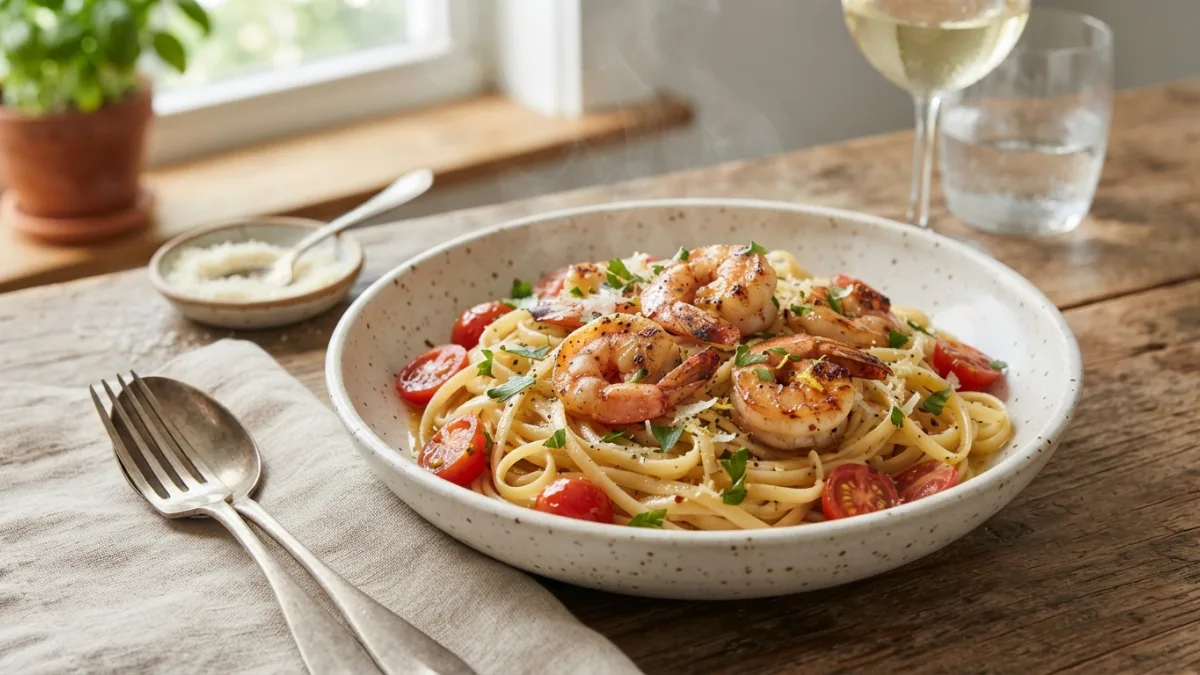
20-Minute Garlic Butter Shrimp Pasta
There’s something magical about a dish that tastes like it took hours but actually comes together in the time it takes to set the table. Garlic butter shrimp pasta is exactly that kind of recipe: buttery, garlicky, packed with juicy shrimp, and ready in about 20 minutes flat. If you’ve ever stood in front of the fridge at 6 p.m. wondering what to make for dinner, this is the answer you’ve been looking for. It uses simple pantry staples, cooks in one or two pans, and delivers restaurant-quality flavor without the restaurant price tag or the wait for a table.
This recipe has earned its spot as a go-to quick weeknight dinner for a good reason. Shrimp cooks incredibly fast, usually in just three or four minutes per side, which means you’re not standing over the stove for ages. Pasta boils while the shrimp and sauce come together, so nothing sits idle. The result is a meal that feels indulgent but doesn’t demand much of your evening. Whether you’re feeding a hungry family, cooking for one after a long day, or hosting a casual dinner with friends, this dish adapts easily and never feels like a compromise on taste or presentation. If you want to dig deeper, our guide on 15 Weeknight Dinners Ready in 30 Minutes or Less covers this in more detail. This is a common part of dealing with garlic butter shrimp pasta, and it is worth keeping in mind.
What You’ll Need for Garlic Butter Shrimp Pasta
Before jumping into the steps, it helps to gather everything so the cooking process flows smoothly. This shrimp pasta recipe relies on ingredients most people already have on hand, with shrimp and fresh garlic doing most of the heavy lifting. Here’s a simple list to get you started: Many people run into this exact issue with garlic butter shrimp pasta at some point.
- 8 ounces of spaghetti, linguine, or angel hair pasta
- 1 pound of large shrimp, peeled and deveined
- 4 to 6 cloves of garlic, minced
- 4 tablespoons of unsalted butter
- 2 tablespoons of olive oil
- 1/4 cup of dry white wine or chicken broth (optional)
- Red pepper flakes, salt, and black pepper to taste
- Fresh parsley and lemon wedges for finishing
- Grated parmesan cheese, if desired
5 Easy Steps for Garlic Butter Shrimp Pasta
Step 1: Prep the Ingredients First
Good cooking starts with good preparation, and this recipe is no exception. Mince your garlic finely so it spreads evenly through the sauce instead of clumping in one spot. Pat the shrimp dry with a paper towel, since excess moisture will steam the shrimp instead of letting it sear properly. Measure out your butter, olive oil, and wine so they’re within reach once the stove is on. Chop parsley and cut a lemon into wedges now, because you won’t want to stop mid-cook to grab a knife. Having everything prepped before you turn on the burner is what keeps this a genuine 20-minute meal instead of a 40-minute scramble. Keeping garlic butter shrimp pasta in mind here will save you time later on.
Step 2: Cook the Pasta Until Al Dente
Fill a large pot with water, salt it generously, and bring it to a rolling boil. Add your pasta and cook according to the package instructions, aiming for al dente, which means it should still have a slight bite when you taste it. Before draining, scoop out about a cup of the starchy pasta water and set it aside; this liquid becomes a secret weapon later for loosening and binding the sauce. Drain the pasta but don’t rinse it, since the surface starch helps the garlic butter sauce cling to every strand. Time this step so it finishes right around when your shrimp are ready. This detail matters more than it seems once garlic butter shrimp pasta comes up again.
Step 3: Sauté the Shrimp Until Pink
Heat olive oil in a large skillet over medium-high heat until it shimmers slightly. Add the shrimp in a single layer, being careful not to overcrowd the pan, since crowding causes steaming rather than browning. Cook for about two minutes per side, just until the shrimp turn pink and opaque with a light golden edge. Overcooked shrimp turn rubbery fast, so keep a close eye and pull them off the heat the moment they curl into a loose “C” shape. Transfer the shrimp to a plate and set them aside; they’ll go back into the pan shortly, once the sauce is ready. This connects closely with another common issue — see 10 Sheet-Pan Dinners for Busy Weeknights for more on that. It is one of those small things that makes garlic butter shrimp pasta easier to manage overall.
Step 4: Build the Garlic Butter Sauce
In the same skillet, lower the heat slightly and melt the butter, scraping up any flavorful browned bits left behind from the shrimp. Add the minced garlic and cook for about 30 to 60 seconds, stirring constantly so it doesn’t burn and turn bitter. If you’re using white wine or broth, pour it in now and let it simmer for a minute or two to reduce slightly. This garlic butter sauce is the heart of the entire dish, so taste it as you go and adjust the salt, pepper, and red pepper flakes to your liking. A splash of the reserved pasta water at this stage helps loosen everything into a silky consistency. This is a common part of dealing with garlic butter shrimp pasta, and it is worth keeping in mind.
Step 5: Combine, Toss, and Serve
Return the cooked shrimp to the skillet along with the drained pasta, tossing everything together so the sauce coats each strand evenly. If the mixture looks dry, add a little more of that reserved pasta water until it reaches a glossy, restaurant-style finish. Squeeze fresh lemon juice over the top for brightness, then sprinkle with chopped parsley and grated parmesan if you’re using it. Give everything one final toss, taste for seasoning, and serve immediately while the shrimp are still warm and tender. At this point, your garlic butter shrimp pasta is ready to plate, and honestly, it’s hard to resist digging in straight from the pan. Many people run into this exact issue with garlic butter shrimp pasta at some point.
Tips for the Best Garlic Butter Sauce
A few small details separate an average garlic butter sauce from a truly memorable one. First, always use fresh garlic rather than the jarred version, since fresh cloves deliver a sharper, more fragrant punch. Second, keep the heat moderate when the garlic hits the pan; burnt garlic turns bitter almost instantly and can ruin the whole dish. Third, don’t skip the reserved pasta water, because its starch content helps the sauce emulsify into something creamy without needing heavy cream. Finally, add the lemon juice at the very end rather than during cooking, since heat can dull its brightness. According to the Wikipedia entry on garlic, its flavor compounds are highly sensitive to cooking time and temperature, which explains why timing matters so much here. Keeping garlic butter shrimp pasta in mind here will save you time later on.
Variations and Substitutions to Try
One of the best things about this easy shrimp recipe is how forgiving it is when it comes to substitutions. If you’re avoiding wine, chicken or vegetable broth works just as well for deglazing the pan. Gluten-free pasta swaps in easily without changing the cooking method at all. For extra vegetables, toss in a handful of baby spinach, cherry tomatoes, or steamed asparagus during the final toss. Some cooks like adding a splash of heavy cream for a richer, more decadent sauce, while others prefer keeping it light and butter-based. You can also swap shrimp for scallops or chicken if that’s what you have on hand, though cooking times will vary slightly depending on the protein you choose. You might also find our article on 20 Pantry Staples Every Quick-Cooking Kitchen Needs helpful here. This detail matters more than it seems once garlic butter shrimp pasta comes up again.
What to Serve With Garlic Butter Shrimp Pasta
This dish is satisfying enough to stand on its own, but a few simple sides can round out the meal nicely. A crisp green salad with a light vinaigrette balances the richness of the butter sauce without competing for attention. Crusty bread is almost essential here, mainly because it’s perfect for mopping up any leftover garlic butter sauce sitting at the bottom of the bowl. Steamed or roasted vegetables like broccoli, zucchini, or green beans add color and a bit of extra nutrition to the plate. For drinks, a chilled glass of white wine pairs naturally with the seafood, though sparkling water with lemon works just as well for a lighter, family-friendly option. It is one of those small things that makes garlic butter shrimp pasta easier to manage overall.
Storing and Reheating Leftovers Safely
If you happen to have leftovers, store them in an airtight container in the refrigerator and try to eat them within two days for the best texture and flavor. Shrimp is delicate, and food safety guidelines from the FDA’s advice on serving seafood safely recommend refrigerating cooked seafood promptly and not leaving it at room temperature for more than two hours. When reheating, use low heat on the stovetop with a splash of water or broth to loosen the sauce, since microwaving on high can make the shrimp tough and chewy. Avoid reheating more than once, both for quality and safety reasons. If you’re curious about the nutritional profile of shrimp itself, resources like USDA FoodData Central offer detailed breakdowns of protein, fat, and calorie content per serving. This is a common part of dealing with garlic butter shrimp pasta, and it is worth keeping in mind.
What makes this 20-minute dinner recipe so appealing isn’t just the speed, it’s the balance of ease and genuine flavor. You don’t need fancy equipment, rare ingredients, or advanced cooking skills to pull this off successfully on a random Tuesday night. It’s the kind of recipe that fits into a busy schedule while still feeling like a proper, satisfying meal rather than something thrown together out of necessity. Once you’ve made it a couple of times, you’ll likely have the steps memorized, and it becomes second nature to whip up whenever shrimp is on sale or you simply need something comforting on the table fast. Many people run into this exact issue with garlic butter shrimp pasta at some point.
Frequently Asked Questions
Can I use frozen shrimp for this recipe?
Yes, frozen shrimp works well as long as it’s fully thawed and patted dry before cooking. Thaw it overnight in the fridge or run it under cold water for a quicker option, then remove excess moisture with a paper towel so it sears properly instead of steaming. For a related walkthrough, check out One-Pan Chicken Fajitas in Under 30 Minutes. Keeping garlic butter shrimp pasta in mind here will save you time later on.
What type of pasta works best with garlic butter shrimp pasta?
Long, thin noodles like spaghetti, linguine, or angel hair tend to work best because they hold the light sauce evenly without overwhelming the shrimp. That said, short pasta shapes like penne or fusilli also work fine if that’s what you have available. This detail matters more than it seems once garlic butter shrimp pasta comes up again.
How do I know when the shrimp is fully cooked?
Shrimp is done once it turns pink and opaque and curls into a loose “C” shape. If it curls tightly into an “O,” it’s likely overcooked, so aim to pull it from the heat right at that pink, slightly firm stage. It is one of those small things that makes garlic butter shrimp pasta easier to manage overall.
Can I make this dish without wine?
Absolutely. Chicken broth, vegetable broth, or even a splash of extra lemon juice mixed with water can replace the wine without sacrificing much flavor. The garlic butter sauce will still taste rich and satisfying. This is a common part of dealing with garlic butter shrimp pasta, and it is worth keeping in mind.
Is this recipe suitable for meal prep?
It can be, though shrimp pasta is best enjoyed fresh since the texture of both the noodles and shrimp changes slightly after refrigeration. If you do meal prep it, store the sauce and pasta separately when possible and reheat gently on the stovetop. Many people run into this exact issue with garlic butter shrimp pasta at some point.